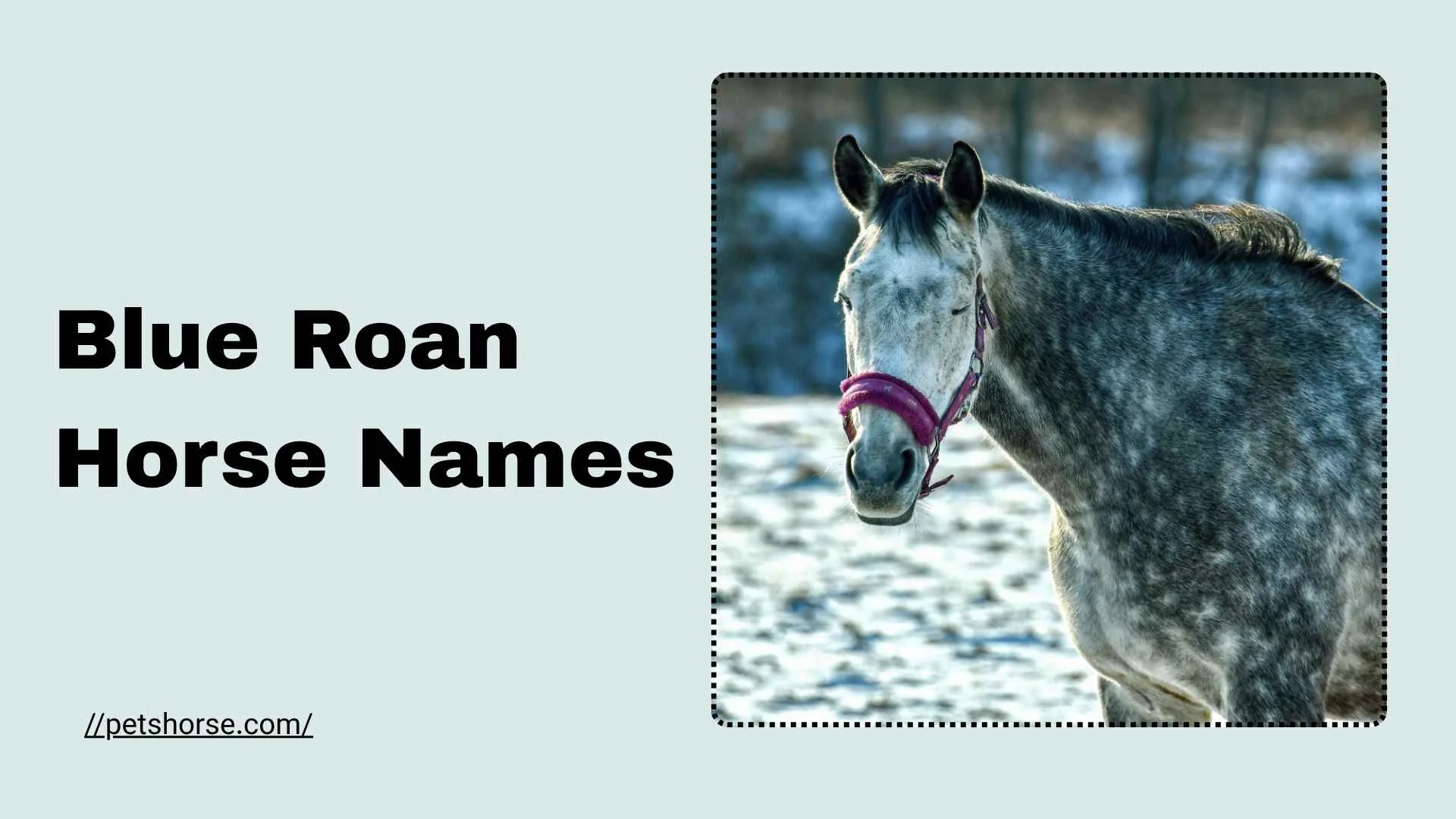
There is something undeniably magical about a blue roan horse. Standing in a pasture, their coat seems to shift colors with the light moving from an icy, frosted silver in the morning sun to a deep, stormy slate as twilight falls.
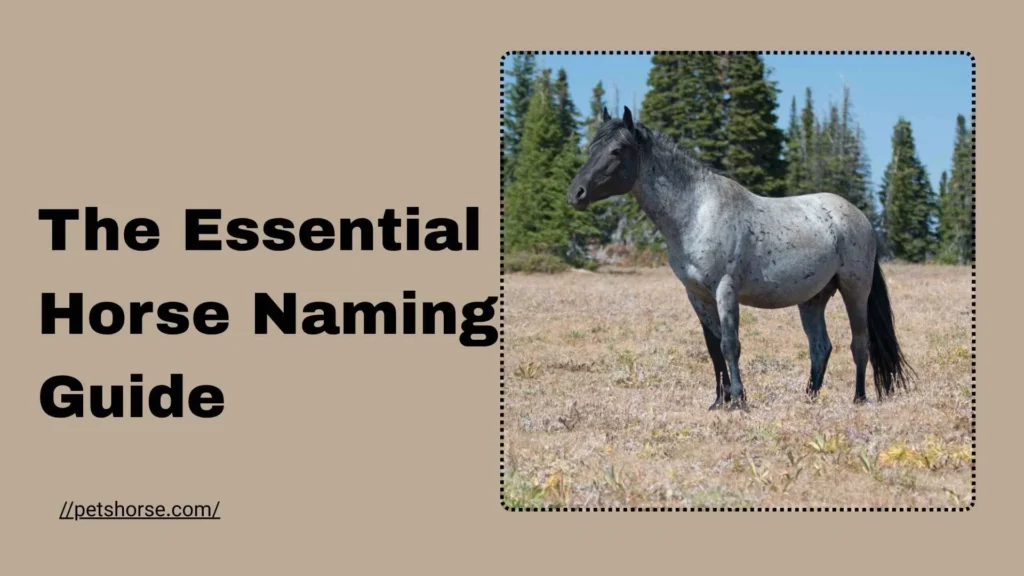
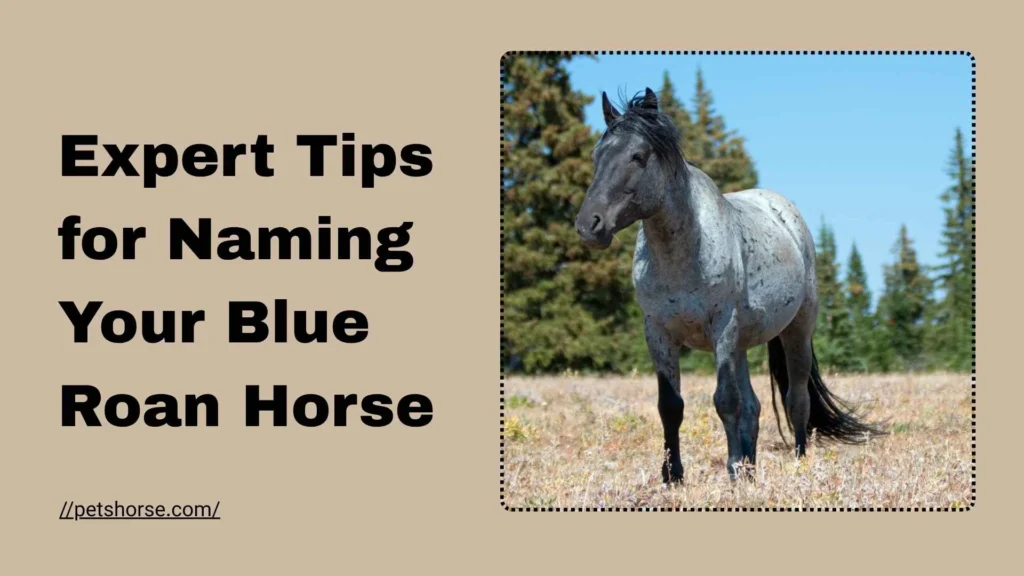
This striking visual texture is created by an even mixture of white and black hairs interspersed across the body, while the head, mane, tail, and lower legs remain a deep, solid black.
Choosing a name for such a striking animal is a significant milestone. A great horse name does more than fill out a coggins test or registration paper; it honors your horse’s unique heritage, captures their personality, and deepens the bond you share.
Throughout equine history, naming traditions have drawn from the stars, mythology, geographical landscapes, and military valor.
Whether you are looking for a rugged western moniker for a Quarter Horse, an elegant name for an undomesticated Mustang, or a sharp, performance-ready name for the show ring, this guide provides an exhaustive, curated registry of blue roan horse names.
Every single name in this guide includes its linguistic origin, deeper meaning, and symbolic fit to ensure your equine companion receives a name worthy of their majestic presence.
Featured Snippet Section
What Are The Best Blue Roan Horse Names?
The best blue roan horse names highlight the horse’s unique slate-blue or frosted-silver coat pattern. Top choices include Indigo (representing the deep blue dye), Cobalt (a strong elemental metal), Smokey (for a classic western feel), Arcturus (an ancient, brilliant star), and Slate (evoking solid rock and dark grey-blue earth).
How Do You Choose The Perfect Horse Name?
- Analyze the Coat: Observe the balance of black and white hairs to see if they lean toward a light “frosted” look or a dark “gunmetal” shade.
- Evaluate Personality: Match bold, fiery horses with powerful or mythological names, and calm, gentle horses with nature-inspired terms.
- Determine the Context: Select a short, punchy “barn name” for daily use, and a formal “registered name” for official breed association paperwork.
- Test the Pronunciation: Say the name out loud across the pasture to ensure it is distinct, easy to project, and simple for the horse to recognize.
The Essential Horse Naming Guide
To choose an exceptional name, it helps to understand how equine naming systems function across different contexts. In the equestrian world, a horse almost always carries two distinct identities: their stable name (or barn name) and their registered name.
Stable Names vs. Registered Names
- Stable Name: This is the name used every single day in the barn, out in the pasture, and during training sessions. It is typically short (one or two syllables), easy to pronounce, and often affectionate or descriptive. Examples include Blue, Smokey, Stormy, or Ash.
- Registered Name: This is the formal identity submitted to breed registries like the American Quarter Horse Association (AQHA), the American Paint Horse Association (APHA), or the Jockey Club. These names follow strict character limits (often 21 to 30 characters including spaces) and cannot be duplicated within the registry. They frequently combine the bloodlines of the sire and dam or incorporate the name of the breeding ranch (e.g., Blue Valentine, Royal Blue Boon, * Hancock Silver Slate*).
The Chemistry of the Blue Roan Coat
Understanding the genetics of your horse can provide deep inspiration for names. The blue roan pattern is not a distinct breed, but rather a coat color modification caused by the Roan (Rn) gene acting upon a base coat of true black.
The roan gene is an inherited dominant trait that causes white hairs to mix evenly with colored hairs across the torso, while leaving the head, lower legs, mane, and tail completely solid and dark. Interestingly, true roan horses do not change color as they age, unlike grey horses which gradually turn white. However, their coats do change dramatically with the seasons—often looking darker in the winter and lighter, more vibrant, and heavily “frosted” in the spring after shedding their winter hair.
Male Blue Roan Horse Names
These names offer a masculine presence, striking a balance between strength, resilience, and the cool, steely tones of the blue roan coat.
- Ash: Old English origin. Meaning “powdery residue left after a fire.” This name perfectly suits a male roan with a lighter, heavily silvered coat that resembles fresh wood ash.
- Axel: Scandinavian origin. Meaning “father of peace.” A wonderful name for a calm, dependable gelding or stallion who brings a steady, peaceful presence to the herd.
- Blizzard: American colloquial origin. Meaning “a severe, blinding snowstorm.” Ideal for a male horse whose coat has an exceptionally high concentration of white hairs, giving him a heavily frosted, snow-swept look.
- Bluegrass: Regional American origin. Referring to the fertile pasture grass of Kentucky, which appears vibrant green-blue in large fields. This name carries a strong connection to classic equine heritage and pastoral beauty.
- Carbon: Latin origin. Meaning “coal” or “the elemental basis of life.” A sharp name for a darker blue roan whose coat leans heavily toward deep charcoal and gunmetal tones.
- Chrome: Greek origin. Meaning “color” or “purity of a hue.” Often used in the horse world to describe flash white markings, it also fits a gleaming, metallic-looking roan stallion.
- Cinder: Old Norse origin. Meaning “unburnt piece of coal.” Excellent for a gelding with a dark black head and a body that looks like a mixture of ash and glowing ember remnants.
- Coal train: Modern English origin. Symbolizing raw, industrial locomotive power and a dark, unstoppable momentum. This name fits a massive draft cross or a powerful roan performance gelding.
- Cobalt: German origin. Meaning “a hard, lustrous, silver-blue magnetic chemical element.” A strong, chemical-inspired name for a horse with a brilliant, high-contrast blue sheen.
- Corbin: Anglo-Norman origin. Meaning “raven” or “dark-haired.” This name honors the solid, jet-black points on the horse’s face, ears, mane, and tail.
- Diesel: German origin. Representing heavy machinery, industrial fuel, and rugged reliability. An excellent barn name for a stocky, muscular ranch horse or roan roping gelding.
- Dusty: Old English origin. Meaning “covered with fine particles of earth or ash.” A classic, down-to-earth name for a horse whose roan coat looks beautifully weathered.
- Eis: German origin. Meaning “ice.” A short, sharp, and modern name for a horse with an icy white-and-black frosted coat that gleams in the winter cold.
- Foggy: Middle English origin. Meaning “thick, mist-filled air.” Perfect for a horse with a soft, muted blue-grey coat that blends smoothly into the horizon.
- Garrison: Old French origin. Meaning “stronghold” or “protection.” A commanding name for a large, protective stallion or a draft-mix roan who watches over his pasture mates.
- Granite: Latin origin. Meaning “grainy rock of immense hardness.” Captures both the physical toughness of the horse and the speckled, salt-and-pepper look of the roan coat.
- Gunner: Old Norse origin. Meaning “bold warrior.” A classic, bold name for a brave trail horse, cutting horse, or competitive athlete who never backs down from a challenge.
- Heisenberg: German cultural origin. Named after the famous quantum physicist, associated with uncertainty and scientific precision. Suits an intelligent, analytical, or slightly mysterious gelding.
- Icebound: Nautical English origin. Meaning “surrounded or locked in by ice.” A dramatic name for a horse whose coat looks completely encased in a frosty, silver-white roan pattern.
- Ironclad: Historical naval origin. Meaning “protected by heavy iron defensive plates.” A powerful name for a thick-boned, indestructible horse with a dark gunmetal coat.
- Jack Frost: English folklore origin. The personification of winter, crisp air, and ice crystal patterns. A playful yet traditional name for a friendly roan gelding with a very bright coat.
- Jasper: Persian origin. Meaning “treasured stone.” While jasper comes in many colors, the name symbolizes enduring value, rarity, and natural beauty.
- Knox: Scottish Gaelic origin. Meaning “from the round hill.” A sturdy, structural name for a dependable, thick-set ranch horse or a sure-footed mountain trail companion.
- Landon: Old English origin. Meaning “long ridge or hill.” A classic, noble name that rolls off the tongue easily, perfect for an elegant or stately gelding.
- Mercury: Roman mythological origin. The swift messenger god, also the name for the liquid silver metal. Suits a fast, agile roan horse with a metallic, reflective sheen to his coat.
- Nickel: German origin. Meaning “bright, silver-white metallic element.” A wonderful name for a compact, shining roan horse with a resilient personality.
- Pebble: Old English origin. Meaning “small, water-smoothed river stone.” A gentle, friendly name for a pony or a small, sweet-natured roan gelding with a highly speckled coat.
- Ranger: Old French origin. Meaning “guardian of the forest or plains.” A highly respected western name that invokes images of rugged endurance and open country.
- Remington: Old English origin. Meaning “settlement on the rugged stream bank,” also associated with classic American craftsmanship. A strong name for a premium working ranch horse.
- River: Latin origin. Meaning “a flowing body of water.” Captures the fluid movement of a horse and the cool, blue-grey tones of a deep, winding waterway.
- Sable: Slavic origin. Meaning “dark, precious fur.” While sable is usually black, the name honors the deep, rich black undertone that anchors the blue roan coat pattern.
- Silverado: Spanish-American origin. Meaning “the place of silver.” A magnificent, expansive name for a flashy, high-quality horse with an exceptionally silvered roan coat.
- Slate: Old French origin. Meaning “fine-grained, grey-blue rock.” Perhaps the most accurate literal description of a classic dark blue roan horse coat.
- Sterling: Old English origin. Meaning “of the highest quality” or “pure silver.” A name reserved for an elegant, beautifully put-together horse with excellent conformation.
- Stone: Old English origin. Meaning “solid earth mineral.” A rock-solid, minimalist name for a horse that is completely dependable, calm, and physically strong.
- Talon: Old French origin. Meaning “the sharp claw of a bird of prey.” A fierce, focused name for a fast, athletic cutting or barrel horse with quick reflexes.
- Titan: Greek mythological origin. A race of powerful, giant deities. An ideal name for a massive blue roan draft horse, Percheron cross, or exceptionally tall gelding.
- Vapor: Latin origin. Meaning “mist, steam, or diffuse moisture.” A poetic name for a horse with a light, airy, indistinct roan pattern that seems to shift in the sunlight.
- Winter: Germanic origin. The season of snow, ice, and dark skies. This name perfectly encapsulates the cold, crisp aesthetic of the white-on-black blue roan coloration.
- Zane: American western origin. Made famous by western author Zane Grey. It is a sharp, short name that directly links your horse to classic stories of the American frontier.
Female Blue Roan Horse Names
These names focus on the delicate, elegant, and ethereal qualities of the blue roan coat, drawing inspiration from flowers, gems, weather patterns, and timeless feminine names.
- Alice: Old German origin. Meaning “of noble character.” A classic, dignified name for a gentle, well-mannered mare who carries herself with grace.
- Bluebell: Scottish origin. A hardy woodland flower that thrives in early spring, blooming in shades of violet-blue. Ideal for a vibrant, resilient, and sweet-tempered mare.
- Breeze: Old Spanish origin. Meaning “a gentle, cooling wind.” A beautiful name for a smooth-gaited mare who moves effortlessly under saddle.
- Cadence: Latin origin. Meaning “rhythm, flow, or beat.” A perfect name for a dressage mare, a steady trail horse, or a roan mare with a perfectly balanced trot and canter.
- Celeste: Latin origin. Meaning “heavenly” or “of the sky.” Represents the high-altitude blue tones found in a premium light blue roan coat.
- Clara: Latin origin. Meaning “clear, bright, and famous.” A wonderful name for a highly successful show mare or a horse with a striking, high-contrast face.
- Crystal: Greek origin. Meaning “clear, frozen ice mineral.” Suits a mare with a sparkling, heavily white-flecked roan coat that glints in the sunlight.
- Dawn: Old English origin. Meaning “the first appearance of light in the morning.” Represents the transition from night (black) to light (white), mirroring the roan coat.
- Delphine: Greek origin. Derived from the dolphin, symbolizing grace, fluid movement, and the deep blue ocean. Excellent for a fluid, athletic mare.
- Dove: Old Norse origin. A bird symbolizing peace, gentleness, and soft grey-white coloration. Perfect for an exceptionally quiet, sweet-natured mare or kid-safe horse.
- Echo: Greek mythological origin. A mountain nymph whose voice repeated across the landscape. A poetic name for a responsive mare who mirrors her rider’s subtle cues.
- Elsa: Scandinavian origin. Meaning “noble” or “pledged to God,” highly associated in modern culture with ice, snow, and winter magic. Perfect for a bright, frosted roan filly.
- Fern: Old English origin. A resilient, shade-loving plant. This name brings to mind quiet, mossy forests, making it an excellent fit for a steady, dependable trail mare.
- Gemma: Italian origin. Meaning “precious stone or jewel.” A sweet, high-value name for a cherished mare who is considered a true treasure in the barn.
- Haze: Old English origin. Meaning “fine dust or mist reducing visibility.” Represents the soft, blended, indistinct look of a dark blue roan coat from a distance.
- Heather: Scottish origin. A hardy evergreen shrub that covers the Scottish highlands, often blooming in soft, muted purples and grey-blues. Fits a sturdy, adventurous mare.
- Iris: Greek origin. Meaning “rainbow,” also a classic deep purple-blue flower. Connects beautifully to the subtle violet and indigo undertones seen in clean roan coats.
- Ivy: Old English origin. An evergreen climbing vine symbolizing fidelity, endurance, and eternal life. A classic, elegant name for a loyal, long-term equine partner.
- Jewel: Old French origin. Meaning “a precious ornament.” A simple, beautiful name for a high-quality mare with a sparkling, high-contrast coat.
- Lark: Old English origin. A cheerful songbird known for flying high into the sky. Suits a spirited, energetic, and joyful young roan filly.
- Lavender: Latin origin. Meaning “to wash,” referring to the aromatic, pale violet-blue flower. Captures the unique, soft, pastel-like hue of certain roan patterns.
- Luna: Latin origin. Meaning “the moon.” A highly symbolic name for a roan mare, as her coat reflects the white, cratered, and dark slate textures of the lunar surface.
- Mist: Old Norse origin. Meaning “low-hanging cloud surface water.” Fits a mare with a light, hazy coat who seems to glide effortlessly through the morning pastures.
- Opal: Sanskrit origin. A precious gemstone known for its play of color, flashing whites, blues, and greys. Ideal for a roan mare whose coat shifts colors depending on the angle of the light.
- Pearl: Latin origin. A smooth, iridescent organic gem formed within a shell. Represents classic luxury, rarity, and a beautiful glowing sheen.
- Periwinkle: Latin origin. A pale blue-purple creeping flower. A whimsical, lighthearted name for a friendly pony or a sweet-faced roan mare.
- Rain: Old English origin. Meaning “condensed atmospheric moisture falling in drops.” Connects to stormy weather, cool slate skies, and clean, natural energy.
- Rhapsody: Greek origin. Meaning “an effusive expression of feeling or an epic poem.” A sophisticated name for a high-stepping, elegant show mare or performance horse.
- Saffire: Hebrew origin. Meaning “precious blue gemstone.” A direct, striking name for a premium mare with an unmistakably deep indigo hue to her coat.
- Skye: Scottish origin. Named after the Isle of Skye, known for its misty, rugged volcanic landscapes and grey-blue coastal weather. A beautiful, atmospheric name.
- Smokey: Modern English origin. Meaning “filled with dark, hazy air from a fire.” A timeless, classic western barn name for a dependable, hard-working ranch mare.
- Stormy: Old English origin. Meaning “turbulent, weather-driven skies.” Perfect for a high-spirited, powerful mare or one with a dark, dramatic, cloud-like roan pattern.
- Sylvia: Latin origin. Meaning “from the forest or woods.” A classic, elegant name that suits a calm, nature-loving trail mare who is completely at home in the wilderness.
- Thistle: Scottish origin. A rugged, sharp-leaved wild flower with a soft purple-blue top. Fits a tough, independent, and highly resilient mare who can handle any terrain.
- Twilight: Old English origin. The soft, ambient light that occurs between sunset and full darkness. Captures the exact visual feel of a dark blue roan horse standing in evening light.
- Violet: Latin origin. A delicate, deep blue-purple flower symbolizing modesty and faithfulness. A beautiful name for a quiet, reliable, and deeply loyal mare.
- Willow: Old English origin. A graceful tree known for its flexible branches and ability to thrive near water. Ideal for an agile, supple, and highly athletic mare.
- Windy: Old English origin. Meaning “exposed to or characterized by strong wind.” Suits a fast, free-moving mare who loves to gallop across open pastures.
- Wren: Old English origin. A small, incredibly active, and hardy songbird. A delightful name for a compact, quick, and energetic roan pony or filly.
- Zora: Slavic origin. Meaning “dawn” or “aurora.” A sharp, memorable name that symbolizes a fresh start, clean energy, and natural radiance.
Unique & Rare Blue Roan Horse Names
If you want your horse to stand out in the staging area or breed registry, these distinctive names offer deep historical, linguistic, and scientific meanings.
- Andor: Old Norse origin. Meaning “eagle of Thor.” A powerful, rare name for a brave horse, carrying an old-world weight and mythic strength.
- Arcturus: Greek origin. The brightest star in the northern celestial hemisphere. A magnificent name for a standout stallion who anchors the entire barn.
- Azura: Spanish origin. Derived from the azure stone, meaning “sky-blue.” A rare, musical name that brings to mind vivid, high-altitude alpine skies.
- Beryl: Greek origin. A mineral crystal that often forms in beautiful sea-blue and pale green-grey shades. A distinctive name for a precious, refined horse.
- Cadet: French origin. Meaning “younger brother” or “military trainee.” A sharp, disciplined name for a young gelding showing immense promise and work ethic.
- Calypso: Greek mythological origin. A sea nymph who captured Odysseus with her enchanting voice. Fits a mesmerizing mare who completely capturing the attention of anyone who visits.
- Chaleur: French origin. Meaning “deep warmth or intensity.” A sophisticated name for a passionate, spirited horse with a highly expressive personality.
- Cyon: Ancient Greek origin. Meaning “a brilliant blue substance.” A highly unique, modern-sounding name that directly addresses the unique blue coat color.
- Dapple: Old Norse origin. Meaning “marked with small spots or patches.” While roans are technically uniform, some exhibit beautiful seasonal mapping and dappling.
- Electra: Greek origin. Meaning “amber, shining, or incandescent incandescent radiant energy.” A high-voltage name for a quick, exceptionally fast-moving roan horse.
- Fjord: Old Norse origin. A deep, narrow sea inlet bordered by high, steep cliffs, heavily associated with cool Scandinavian landscapes. Captures a rugged, pristine look.
- Gale: Old English origin. Meaning “a very strong, forceful wind.” Excellent for a powerful performance horse who moves with explosive, wind-like acceleration.
- Gentry: Old French origin. Meaning “of high social standing and noble birth.” A dignified name for a horse with flawless conformation and a stately presence.
- Glacier: French origin. A massive, slow-moving river of solid ice. Represents unstoppable momentum, massive physical size, and clean winter color tones.
- Hologram: Greek origin. A three-dimensional image formed by light interference. Perfectly describes how a blue roan’s coat seems to change three-dimensionally in different light conditions.
- Insignia: Latin origin. A badge or mark of official power, military rank, or distinction. Fits a horse that carries themselves with undeniable leadership and pride.
- Kestrel: Old French origin. A small, highly agile falcon known for its hovering flight and hunting precision. Great for a quick-turning cutting horse or barrel racer.
- Lichen: Greek origin. A resilient organism that forms a crusty, grey-blue or silver growth on rocks and trees. A deeply organic, unusual name for a hardy trail horse.
- Mistral: French origin. A cold, powerful, northern wind that blows through southern France into the Mediterranean. A dramatic name for a fast, free-spirited horse.
- Nebula: Latin origin. An interstellar cloud of cosmic dust and gas where stars are born. Describes the swirling, cosmic mixture of white and black hairs on a roan horse.
- Nimbus: Latin origin. A dark, rain-bearing cloud. A fantastic name for a dark blue roan horse whose coat resembles a gathering summer thunderstorm.
- Nova: Latin origin. A star that suddenly increases in brightness and then fades. Fits a young horse with an incredibly bright, explosive future in the show ring.
- Obsidian: Latin origin. A dark, glassy volcanic rock. Honors the deep black base coat, mane, and tail that anchors the lighter roan torso.
- Onyx: Greek origin. A banded chalcedony gemstone, typically jet black. Perfect for a very dark roan horse whose solid black points are highly defined.
- Pacer: English origin. Referring to a smooth, rhythmic traveling gait or a leader who sets the speed for the rest. Great for a gaited trail horse or confident herd leader.
- Quasar: Astronomical origin. A massively energetic and luminous galactic core powered by a black hole. A highly modern name for an energetic, powerhouse horse.
- Rune: Old Norse origin. A secret character or mark used in ancient Germanic alphabets, carrying mystical meaning. A beautiful name for a wise, mysterious horse.
- Sentry: Old French origin. A soldier stationed to keep guard. An exceptional name for a calm, watchful gelding who always stands alert at the pasture gate.
- Specter: Latin origin. A ghost or phantom apparition. A poetic name for an exceptionally light blue roan who seems to appear silently out of the morning mist.
- Stratos: Greek origin. Meaning “high altitude layers of the atmosphere.” Connects to vast open skies and cold, crisp upper-air blue-grey tones.
- Tarmac: Modern English origin. A dark, durable, stone-and-tar paved surface. A unique name for an incredibly tough, sound-boned horse with a dark gunmetal coat.
- Telstar: Modern historical origin. The first active communications satellite launched into space. A cool, mid-century retro name for a forward-thinking, intelligent horse.
- Topaz: Sanskrit origin. A silicate mineral gem. While often yellow, blue topaz is highly prized, making this name an elegant nod to a rare, blue-tinted horse.
- Vesper: Latin origin. Meaning “evening star” or “evening prayers.” A serene, deeply beautiful name for a quiet horse who loves peaceful sunset rides.
- Zephyr: Greek origin. The personification of the gentle west wind. A timeless, poetic name for a light, responsive, and smooth-riding horse.
Western Cowboy Blue Roan Horse Names
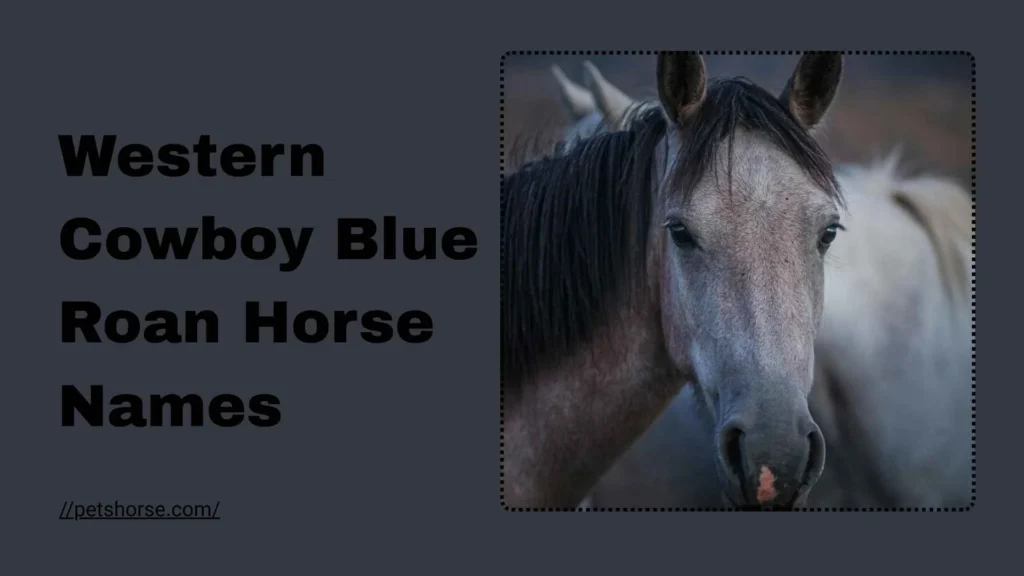
Blue roans are royalty in the western world, heavily favored by working cowboys, rodeo athletes, and high-country packers for their historic association with classic working bloodlines like the Blue Valentine Hancock horses.
- Bandit: Italian origin. Meaning “an outlaw or robber.” A fun, roguish name for a clever horse with a dark black face that looks like a thief’s mask.
- Blaze: Old English origin. Meaning “a bright, burning fire,” also refers to a broad white stripe down a horse’s face. A bold western standard.
- Bronco: Spanish origin. Meaning “rough, wild, or untamed.” Honors the wild Mustang heritage of the American West and fits a horse with a lot of grit.
- Chisum: American frontier origin. Named after John Chisum, a legendary cattle baron of the American West. A strong name for a true cow horse.
- Cochise: Apache origin. Named after the famous leader of the Chihuicahua band of Chiricahua Apache, known for his bravery and strategy. A deeply respectful, historical western name.
- Colt: Old English origin. Meaning “a young male horse,” it also brings to mind classic frontier firearms. A crisp, masculine western favorite.
- Cowboy: American cultural origin. The ultimate symbol of frontier grit, horse riding skill, and cattle ranching heritage.
- Dallas: Scottish origin. Meaning “from the meadow dwelling,” highly associated with the iconic Texas cattle country and western culture.
- Denver: French-English origin. Meaning “green valley,” synonymous with high mountain ranges, crisp air, and rugged western adventures.
- Deputy: Old French origin. An official appointed to assist a sheriff in maintaining law and order. Perfect for a reliable, disciplined horse that always does his job.
- Flint: Old English origin. An incredibly hard stone used to strike fire. Suits a tough-as-nails ranch horse with a speckled grey-blue coat that resembles natural river flint.
- Grit: Old English origin. Meaning “firmness of character; indomitable spirit.” The ultimate accolade for a working horse that never quits, even during a long day in rough terrain.
- Hancock: English origin. A cornerstone surname in blue roan history, tracing back to Joe Hancock, a foundational AQHA sire known for producing massive, athletic, blue roan ranch horses.
- Lariat: Spanish origin. From la reata, the lasso rope used by vaqueros and cowboys to catch cattle. A perfect name for a quick-footed, highly responsive roping horse.
- Maverick: American origin. Meaning “an independent individual who does not conform to the herd.” Ideal for a bold, free-thinking horse with a strong personality.
- Outlaw: Old English origin. A person who lives outside the law. A classic western name for a spirited horse with a rebellious streak or an unstoppable motor.
- Pistol: French origin. A small, powerful hand firearm. A punchy name for a compact, explosive horse who is lightning-fast out of the starting gate or roping box.
- Rawhide: American pioneer origin. Untanned cattle skin used to make whips, lariats, and tack. Symbolizes a tough, unbroken, and traditional western lifestyle.
- Remington: Old English origin. Meaning “place on a rugged riverside,” highly celebrated in the West for its association with historic frontier firearms and art.
- Ringo: German origin. Meaning “ring,” famously associated with Johnny Ringo, the legendary outlaw cowboy of the wild west. A sharp, memorable moniker.
- Rodeo: Spanish origin. From rodear, meaning “to encircle.” Captures the energy, athletic skill, and excitement of traditional western equine sports.
- Rowdy: American origin. Meaning “rough, boisterous, and high-spirited.” Perfect for a playful, energetic gelding who loves to run and play in the pasture.
- Sundance: Native American cultural origin. Named after the sacred ceremony of the Plains Indians, also famously associated with the outlaw Sundance Kid. A bright, historic western name.
- Tex: American regional origin. A short, classic nickname for someone from Texas, the heart of American cattle ranching and Quarter Horse history.
- Trigger: English origin. The mechanism that fires a gun, famously the name of Roy Rogers’ iconic golden horse. Represents quick responsiveness and western charm.
- Tucson: O’odham origin. Meaning “at the base of the black hill.” A beautiful southwestern name that honors the dark points and desert-hardy nature of western horses.
- Wyatt: Old English origin. Meaning “brave in battle,” immortalized by Wyatt Earp, the legendary lawman of Tombstone, Arizona. A timeless name of frontier justice and courage.
Mythological & Fantasy Blue Roan Horse Names
The ethereal, shifting color of the blue roan coat fits beautifully into the worlds of ancient folklore, celestial bodies, and fantasy epics.
Greek, Norse, & Celtic Myth
- Asgard: Old Norse origin. The sky-high realm of the Norse gods. Fits a large, regal stallion who rules over his pasture like a deity.
- Avalon: Celtic origin. The legendary, mist-shrouded island where King Arthur’s sword Excalibur was forged. A beautiful name for a mysterious, silver-blue horse.
- Freya: Old Norse origin. The goddess of love, beauty, and battle, known for her strength and independent spirit. An exceptional name for a gorgeous, powerful roan mare.
- Loki: Old Norse origin. The shape-shifting trickster god. A perfect, playful name for a clever horse who always finds a way to open stall latches or tease his pasture mates.
- Odin: Old Norse origin. The Allfather god of wisdom, war, and magic, who rode Sleipnir, the legendary eight-legged grey horse. A deeply commanding name for a wise herd leader.
- Thor: Old Norse origin. The god of thunder, storms, and immense physical strength. Ideal for a heavy draft horse or an incredibly muscular, powerful gelding.
- Valhalla: Old Norse origin. The majestic, heavenly hall where brave warriors rest in the afterlife. A grand name that evokes historical honor, courage, and epic landscapes.
- Valkyrie: Old Norse origin. The soaring female deities who chose who would live and die in battle. A striking name for a fast, fierce, and beautiful performance mare.
Sci-Fi, Fantasy, & Pop Culture
- Aragorn: Literary fantasy origin. The brave, noble king from The Lord of the Rings who spent years wandering the wild wilderness. Excellent for a trustworthy, brave trail gelding.
- Arwen: Literary fantasy origin. The elegant, ethereal Elven princess from Middle-earth. A sophisticated name for a refined, light-coated blue roan mare with exceptional grace.
- Gandalf: Literary fantasy origin. The iconic wizard known as the “Grey Pilgrim” who rode Shadowfax, the king of horses. A magnificent name for an intelligent, wise, and silver-flecked roan.
- Merlin: Arthurian legend origin. The world’s most famous wizard and adviser to Camelot. Perfect for a highly intelligent horse who seems to figure things out by pure magic.
- Mystique: Modern pop culture origin. A shape-shifting comic book character known for her striking blue appearance. An awesome name for a mare whose coat shifts colors with the seasons.
- Nebula: Latin origin. A vast interstellar cloud of gas and dust. A beautiful, space-themed name for a horse with a complex, swirling white-and-black coat pattern.
- Shadowfax: Literary fantasy origin. The mythical lord of all horses in Tolkien’s lore, capable of running faster than the wind. A premium name for an exceptionally fast, silver-white roan.
- Skywalker: Modern pop culture origin. Associated with cinematic space epics, soaring flight, and heroic destinies. Fits an ambitious, high-jumping, or incredibly athletic horse.
Personality-Based Blue Roan Horse Names
Sometimes the best name comes from watching how your horse behaves when they think no one is looking. Match these names to your horse’s unique temperament.
The Gentle & Calm Horse
- Barnaby: German origin. Meaning “son of consolation” or “comfort.” A sweet, friendly name for a horse that acts as a true therapist and steady friend to their owner.
- Charity: Latin origin. Meaning “generous, unconditional love and kindness.” Ideal for a patient, gentle mare who excels at teaching young children how to ride.
- Clemens: Latin origin. Meaning “merciful, mild, and gentle.” A classic, soft name for a horse that never bites, kicks, or shows aggression.
- Gideon: Hebrew origin. Meaning “feller of trees” or “brave warrior,” historically associated with a quiet, humble leader. Suits a peaceful yet strong horse.
- Justus: Latin origin. Meaning “just, fair, and balanced.” A wonderful name for a calm, level-headed gelding who stays completely level-headed in stressful situations.
- Placid: Latin origin. Meaning “calm, serene, and untroubled.” The perfect name for a horse that is completely bombproof on the trail and unfazed by traffic or wildlife.
- Serene: Latin origin. Meaning “clear, tranquil, and untroubled sky.” Fits a quiet mare with a soft, peaceful eye who brings a sense of calm to the entire barn.
The Spirited & Bold Horse
- Brio: Italian origin. Meaning “vivacity, spirit, and high energy.” A short, punchy name for a forward-moving horse who loves to work and has a lot of natural engine.
- Dash: Modern English origin. Meaning “to move with sudden speed and explosive energy.” Great for a barrel racing horse or a young filly who sprints across the pasture for fun.
- Fuego: Spanish origin. Meaning “fire.” A bold, energetic name for a hot-blooded, spirited horse with an incredible work ethic and fiery personality.
- Rogue: French origin. Meaning “unpredictable, independent, and fiercely non-conforming.” Suits a highly intelligent horse with a mischievous, playful streak.
- Spitfire: English origin. A person or animal with a fierce, hot-tempered, and highly determined spirit. An awesome name for a competitive gymkhana or sorting horse.
- Vigor: Latin origin. Meaning “physical strength, active force, and high energy.” Excellent for a robust, hard-working ranch horse who never seems to get tired.
- Wildfire: English origin. A fast-moving, uncontrollable brush fire. A dramatic name for an incredibly fast horse with a striking, high-contrast blue roan coat.
Expert Tips for Naming Your Blue Roan Horse
To ensure you select a name that brings long-term satisfaction, keep these practical considerations in mind:
[Visual Texture] + [Personality Trait] = The Perfect Blue Roan Moniker
- Test the Pasture Call: Horses respond well to short, distinct vocal cues. Choose a stable name with one or two syllables that ends in a vowel sound (e.g., Smokey, Cinder, Loki). These names are much easier to project across a windy 20-acre pasture than long, complex words.
- Study the Seasonal Color Shift: Don’t rush to name your horse based on their winter coat alone. A blue roan can look almost solid black in December, only to shed out into a bright, frosted silver-blue by May. Spend a few weeks observing how their coat reacts to sunlight and different seasons before finalizing a color-based name.
- Check Registry Rules Early: If you are registering your horse with the AQHA, APHA, or ApHC, read their naming guidelines carefully. Avoid punctuation marks, keep the name within the character count limit, and ensure you aren’t using a protected historical name (like Blue Valentine or * Hancock* without appropriate lineage documentation).
- Honor the Heritage: If your horse has a strong foundation pedigree, try to weave a piece of their ancestry into their registered name. This preserves historical equine bloodlines and adds immediate authority and respect when your horse’s name is announced over the loudspeaker at competitions.
Common Naming Mistakes to Avoid
- Choosing Names That Sound Like Basic Commands: Avoid naming your horse anything that sounds too close to words like “Whoa,” “No,” “Gee,” or “Haw.” For example, names like Beau or Joe can easily confuse a young horse during ground training because they sound identical to the command “Whoa.”
- Picking Overly Complicated Registered Names: Avoid using overly long, complex tongue-twisters for official paperwork. Announcers at horse shows have to read hundreds of names a day; if your horse’s registered name is confusing or difficult to pronounce, it will often get butchered over the microphone.
- Ignoring Future Professional Use: A cute, funny name like Blueberry Muffins might be adorable for a young foal, but it may sound out of place if that horse grows up to be a high-stakes arena rope horse or a professional dressage competitor. Choose a stable name that can gracefully transition from a playful youngster to a mature, working athlete.
Final Blue Roan Naming Checklist
Before painting your horse’s new name onto their stall plaque or leather halter, review this checklist to make sure it hits every mark:
- [ ] Is it easy to pronounce? Can you easily call it out three times in a row without getting tongue-tied?
- [ ] Does it fit their coat? Does the name accurately reflect whether they have a dark gunmetal or light frosted coat?
- [ ] Does it match their personality? Does a high-octane name match a spirited horse, or a calm name match a gentle horse?
- [ ] Is it free of command confusion? Make sure it doesn’t sound like “Whoa”, “No”, or “Back”.
- [ ] Is it approved by the family? Does everyone who will handle, feed, and ride the horse enjoy saying the name?
- [ ] Is it ready for competition? Does it sound proud and dignified when called out over a public address speaker?
Frequently Asked Questions (FAQ)
What is the rarest color for a horse?
True roan itself is relatively uncommon compared to solid bays and chestnuts, but the lilac roan (a roan gene acting on a dark chestnut/liver base coat) and blue roan are highly sought after for their striking, metallic appearance.
Do blue roan horses change color as they get older?
No. Unlike grey horses, which are born dark and gradually turn completely white over several years, a true blue roan horse keeps the same ratio of black and white hairs throughout their entire life. However, their coats do change appearance seasonally when they shed their hair in the spring and fall.
What are the most popular names for a blue roan horse?
The most popular traditional names for blue roans are Blue, Smokey, Slate, Indigo, and Stormy. These names are favored because they are short, classic, and clearly highlight the horse’s unique blue-grey coat.
Can two horses have the same registered name?
No. Major breed associations like the AQHA and the Jockey Club require every single registered name to be completely unique within their database to prevent confusion in breeding lines and competition tracking. Stable names, however, can be repeated as much as you like.
Why do some blue roan horses look darker than others?
The shade of a blue roan depends entirely on the concentration of white hairs mixed into the coat. A “corn roan” or lightly frosted horse has a high concentration of white hairs, while a “gunmetal” roan has far fewer white hairs, making the dark black base coat stand out more.
What breeds can have a blue roan coat pattern?
The roan gene is found in many horse breeds, but it is most prominent in American Quarter Horses, Mustangs, Tennessee Walking Horses, Welsh Ponies, and heavy draft breeds like the Percheron and Brabant.
Conclusion
Choosing a name for your blue roan horse is a wonderful opportunity to celebrate one of the most beautiful coat colors in the equine world. If you select a rugged western name that honors ranching heritage, an elegant name inspired by nature, or a powerful mythological name, the perfect moniker is one that honors your horse’s physical appearance and unique personality. Take your time, get to know your horse out in the pasture, and choose a name that you will be proud to call out for years to come.

I am Olivia Carter, a pet lover, animal naming researcher, and creative writer who loves helping people find the perfect names for their furry companions. I believe every pet has a unique personality, and the right name can reflect their character, appearance, and special bond with their family. Through my research and writing, I explore cute, unique, funny, and meaningful pet names inspired by nature, mythology, colors, personalities, and popular culture.
I have written several pet naming guides, including my books “The Ultimate Pet Names Guide: Finding the Perfect Name for Your Companion” and “Creative Cat & Dog Names: Thousands of Ideas for Every Personality.” My goal is to make choosing a pet name simple, enjoyable, and memorable for every pet owner.
 Ethan Williams