Choosing the perfect horse name is an important decision for any horse owner. A horse’s name becomes part of its identity, reflecting its personality, appearance, spirit, and the bond it shares with its rider.
If your horse is brave, gentle, powerful, or adventurous, the right name can capture its unique character and create a lasting connection.
For fans of the acclaimed video game Ghost of Tsushima, horse naming takes on even greater significance. Throughout Jin Sakai’s journey, his horse is more than a companion it is a loyal friend, trusted ally, and symbol of honor.
The emotional connection between rider and horse in the game has inspired countless players to search for meaningful Ghost of Tsushima horse names for their own horses.
Horse naming traditions have existed for centuries across cultures. Samurai warriors often chose names that reflected courage, loyalty, strength, and nature. Japanese folklore, mythology, and history offer a rich source of inspiration for horse names that carry deep meaning and cultural significance.
In this comprehensive guide, you’ll discover hundreds of Ghost of Tsushima-inspired horse names, along with their meanings, symbolism, cultural connections, and explanations. Whether you’re naming a real horse, a game companion, or simply exploring ideas, you’ll find unique, powerful, elegant, and memorable options that honor the spirit of Tsushima.
What Are the Best Ghost of Tsushima Horse Names?
The best Ghost of Tsushima horse names combine loyalty, courage, honor, and Japanese heritage. Popular choices include Kage (Shadow), Sora (Sky), Nobu (Trust), Kaze (Wind), Yuki (Snow), Akira (Bright), Haru (Spring), and Raiden (Thunder). These names reflect the game’s themes of friendship, adventure, and samurai tradition.
How Do You Choose the Perfect Horse Name?
Quick Step-by-Step Guide
- Observe your horse’s personality.
- Consider its color, breed, and appearance.
- Look for names with meaningful symbolism.
- Choose a name that’s easy to pronounce.
- Consider cultural or historical inspirations.
- Test the name aloud several times.
- Select a name you’ll enjoy using for years.
Ghost of Tsushima Horse Naming Guide
How Horse Owners Choose Names
Most horse owners select names based on:
- Personality traits
- Physical appearance
- Heritage and breed
- Historical figures
- Mythology and folklore
- Favorite books, movies, and games
- Cultural traditions
Ghost of Tsushima offers inspiration from all these categories, blending Japanese history, samurai culture, nature, and legendary storytelling.
Stable Names vs Registered Names
A horse may have:
Stable Name
The everyday name used around the barn.
Examples:
- Kage
- Sora
- Nobu
Registered Name
A longer formal name used in competitions and official records.
Examples:
- Shadow of Tsushima
- Wind of Sakai
- Spirit of the Samurai
Why Personality Matters
A brave horse may suit names associated with warriors and heroes, while a calm horse might be better matched with names inspired by nature, peace, or wisdom.
The strongest names create harmony between the horse’s character and its identity.
Ghost of Tsushima Horse Names After Death
One of the most emotional parts of Ghost of Tsushima is the bond between Jin Sakai and his horse. Your horse is not simply a way to travel around Tsushima; it becomes a familiar companion during exploration, battles, and important story moments.
During the beginning of Act III, Jin loses his first horse because of the events of the story. This means you cannot simply continue riding the same horse after that point. Later, during the story mission “Heart of the Jito,” Jin gets the opportunity to choose another horse. The new horse becomes his companion for the remainder of the main story.
The second horse also gives you another opportunity to choose a color and name. For players who became attached to their first horse, this moment can feel surprisingly personal. The game uses the horse as more than transportation, so losing the original mount can make the journey feel different.
If you are searching for Ghost of Tsushima horse names after death, remember that the horse’s death is part of the story rather than a permanent end to your ability to use a mount. You receive another horse later, allowing Jin to continue his journey across Tsushima.
Ghost of Tsushima Horse Names Meaning
The original horse-name choices in Ghost of Tsushima are Nobu, Sora, and Kage. Each name has a different meaning, giving players a small opportunity to personalize Jin’s companion.
Nobu — Trust
Nobu means “Trust.” The name fits the relationship between Jin and his horse because the animal remains beside him as he travels through dangerous areas and difficult battles.
If you see the horse as Jin’s dependable companion, Nobu has a natural connection to that role.
Sora — Sky
Sora means “Sky.” It creates an open, peaceful image and works particularly well for players who associate their horse with freedom and exploration.
Jin spends a great deal of time riding through fields, forests, mountains, and coastal areas, making the idea of the open sky a fitting theme.
Kage — Shadow
Kage means “Shadow.” This name has an especially strong connection to Jin’s transformation into the Ghost.
As Jin increasingly relies on stealth and unconventional tactics, the idea of moving like a shadow becomes an important part of his identity. For that reason, Kage can feel particularly appropriate for players who want their horse’s name to match the Ghost theme.
Importantly, these names do not provide different horse statistics or gameplay abilities. The choice mainly changes how Jin refers to the horse during the game.
Ghost of Tsushima Horse Names Reddit
Players often search Reddit and other gaming communities for opinions about Ghost of Tsushima horse names, especially when deciding between Nobu, Sora, and Kage.
The interesting thing is that there is no gameplay advantage attached to one name. The three names are cosmetic choices, so your decision can simply come down to the meaning or atmosphere you prefer.
For example, a player who values the bond between Jin and his horse may connect with Nobu, while someone who likes the darker Ghost identity may prefer Kage. Sora has a lighter connection to the game’s landscapes and sense of freedom.
Community discussions can also be useful for discovering how other players interpreted the horse’s role in Jin’s story. However, player opinions are personal rather than official game mechanics. If you are choosing a name yourself, the meaning that fits your playthrough is ultimately the most relevant consideration.
Ghost of Tsushima Horse Death
The horse death sequence is one of the memorable story moments in Ghost of Tsushima. Without giving away unnecessary story details, Jin’s first horse is lost near the beginning of Act III.
This is different from accidentally losing a horse during ordinary exploration. The event is part of the scripted story, so players cannot prevent it by changing their riding habits or avoiding a particular area.
Afterward, Jin eventually receives another horse. The game therefore continues to provide a reliable mount for exploration rather than leaving the player without a horse for the remainder of the adventure.
For players searching for Ghost of Tsushima horse death, the key point is simple: the loss is permanent for that particular horse, but it does not mean that Jin can never have another horse.
This story decision also gives the horse relationship more emotional weight. Because players spend so much time traveling with their mount, the loss can feel more significant than the loss of an ordinary gameplay item.
Ghost of Tsushima Digital Deluxe Horse
Players who own the Digital Deluxe Edition or certain special editions have access to an additional horse option. The bonus horse has a different appearance, but it does not provide a special gameplay advantage over the standard horses.
The standard game offers several horse appearances, including white, black, and dapple options, while the Digital Deluxe and Collector’s editions include an additional brown horse option.
The important distinction is appearance rather than performance. Choosing the special horse does not turn it into a faster or stronger mount.
That makes the Digital Deluxe horse mainly an aesthetic bonus. If you like its appearance, it can make Jin’s journey feel more personalized, but you do not need the special edition to have a fully capable horse.
Ghost of Tsushima Horse Armor
Horse armor adds another visual element to Jin’s mount, particularly for players who enjoy customizing the look of their character and horse.
One of the most recognizable horse-related customization items is the Sakai Horse Armor, which is associated with Jin’s family and the game’s samurai heritage. Horse armor can make your mount look more prepared for battle while also reinforcing the visual connection between Jin, his family history, and the samurai world.
However, horse customization should not be confused with choosing a different horse for better basic performance. The horse-selection system is primarily cosmetic, and the available horses do not have hidden speed or combat statistics that make one universally superior to another.
For players who enjoy photo mode or simply want Jin’s mount to match his armor, horse appearance can become an important part of the overall aesthetic.
Ghost of Tsushima Horse Colors
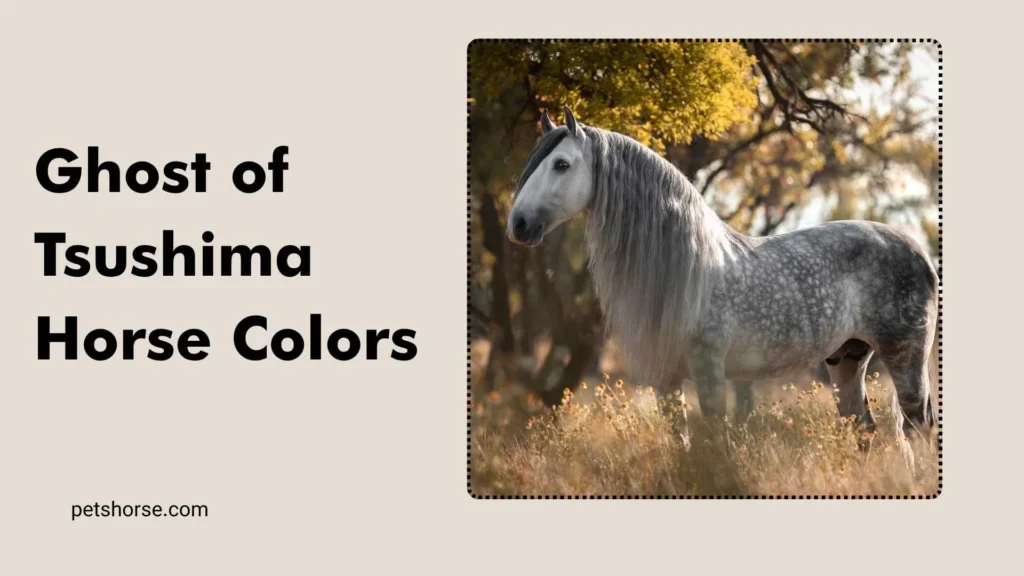
Horse color is one of the first decisions you make when selecting Jin’s companion. The main choices include black, white, and dapple horses, with an additional brown option available through the Digital Deluxe or Collector’s Edition.
Black Horse
The black horse creates a darker, more dramatic appearance. It pairs naturally with Jin’s Ghost identity and darker armor styles.
White Horse
The white horse has a striking appearance against Tsushima’s forests, beaches, snow, and open fields. It also creates a strong visual contrast with darker outfits.
Dapple Horse
The dapple horse has a distinctive coat pattern that gives Jin’s mount a more natural and varied appearance. It is a good choice for players who want something different from a solid black or white coat.
Brown Digital Deluxe Horse
The brown horse is associated with the special-edition horse option. Its appearance gives players another way to personalize Jin’s journey without changing the horse’s basic gameplay performance.
The important thing to remember is that horse color does not determine speed, stamina, or combat effectiveness. The choice is about appearance and personal preference.
Ghost of Tsushima Horse Customization
Horse customization in Ghost of Tsushima is designed more around visual identity and immersion than creating a complicated horse-stat system.
Players can choose a horse color and name, while later parts of the game introduce additional visual equipment and horse-related customization. Your chosen name also helps make the horse feel like an individual companion rather than a generic mount.
The name choices are Nobu, Sora, and Kage, and they do not change the horse’s performance. The same applies to the different basic horse colors.
This simple approach works well because the game focuses on Jin’s relationship with his horse through storytelling rather than through a detailed horse-breeding or stat-management system.
If you want your horse to feel connected to Jin’s personality, consider matching the name and appearance. For example, a black horse with the name Kage creates a darker Ghost-inspired theme, while Sora can give a more open and peaceful feeling.
Jin Sakai Horse Name
Jin Sakai’s horse can be named Nobu, Sora, or Kage when you first choose your mount. The name does not change Jin’s abilities or the horse’s performance, but Jin uses the chosen name when addressing his companion.
This small naming choice has a larger emotional effect than its gameplay impact. Because the horse appears throughout Jin’s journey, hearing the selected name repeatedly helps establish a sense of familiarity.
The three names also offer different themes:
- Nobu — Trust
- Sora — Sky
- Kage — Shadow
Rather than looking for a hidden advantage, think about what you want the name to represent. If loyalty is the main theme, Nobu fits naturally. If you prefer freedom and the open landscape, Sora has a different feeling. If you want the name to reflect Jin’s transformation into the Ghost, Kage connects strongly with that idea.
Horse Names in Ghost of Tsushima
There are three primary horse names available when Jin first selects his mount: Nobu, Sora, and Kage. These choices are shared across the available horse colors, so the name is not tied to a particular coat.
This means you can choose the name based on its meaning rather than worrying about whether a certain name belongs to a specific horse.
The horse-name system is intentionally simple. Unlike games with extensive horse statistics, Ghost of Tsushima does not make you compare speed, stamina, strength, or special abilities between named horses. Your decision is primarily about the relationship you want to create with Jin’s companion.
For a story-focused playthrough, the meaning of the name can even become part of your personal interpretation of Jin’s journey.
Ghost of Yotei Horse Names
If you are searching for Ghost of Yotei horse names, it is important to separate the sequel from Ghost of Tsushima. Ghost of Yotei introduces a different protagonist, Atsu, and its horse-selection system uses different names.
The available name choices are Shimaki, Mochizuki, and Homura. Their commonly given English meanings are Tornado, Full Moon, and Flame, respectively.
The game also provides different horse colors, including white, black, and dapple options, with an additional brown horse connected to the Digital Deluxe Edition. The horses have the same basic performance, so the selection is primarily cosmetic.
Unlike simply changing a temporary mount, your selected horse and name become part of Atsu’s continuing journey. Current guides report that the choice cannot later be changed during the same playthrough.
So, if your search is specifically about Ghost of Tsushima horse names, remember that Nobu, Sora, and Kage belong to Jin’s game, while Shimaki, Mochizuki, and Homura belong to Ghost of Yotei.
Ghost of Tsushima Second Horse Names
After Jin loses his original horse during the story, he eventually receives another mount. During the later horse-selection sequence, an additional name option becomes available: Kaze.
This makes the second-horse naming sequence slightly different from the first one. Instead of simply repeating the original three choices, the game introduces another option for Jin’s replacement horse.
The second horse is not a stronger replacement with better statistics. Its main purpose is to continue Jin’s journey after the story event involving his first mount.
For players researching Ghost of Tsushima second horse names, Kaze is therefore an important term to know. The original horse-name options are Nobu, Sora, and Kage, while Kaze becomes associated with the later horse-selection moment.
Nobu Significado Ghost of Tsushima
Nobu is one of the three horse names available to Jin in Ghost of Tsushima, and it is commonly translated as “Trust.”
The meaning is particularly fitting for a horse because trust is central to the relationship between a rider and a loyal mount. Jin depends on his horse while traveling through dangerous territory, escaping enemies, and moving between different parts of Tsushima.
For players who want a name with a positive and loyal meaning, Nobu provides a simple connection between the name and the role of the horse.
Nobu Meaning Japanese Ghost of Tsushima
The name Nobu is presented in Ghost of Tsushima with the English meaning “Trust.” It is one of the three preset names offered when Jin chooses his horse.
It is worth remembering that the game is presenting a specific naming choice rather than asking players to construct their own Japanese name. The practical in-game effect is simply that Jin calls the horse by the selected name.
Because the game does not attach special abilities to Nobu, choosing it is primarily a storytelling and personalization decision.
Horse Name Options in Ghost of Tsushima
When Jin first selects his horse, the available name options are Nobu, Sora, and Kage. Each has a distinct meaning, but none changes the horse’s performance.
| Horse Name | Meaning | Theme |
|---|---|---|
| Nobu | Trust | Loyalty and companionship |
| Sora | Sky | Freedom and open landscapes |
| Kage | Shadow | The Ghost and stealth |
The best way to approach these choices is to focus on the story connection rather than hidden statistics. Your selected name becomes part of Jin’s relationship with his horse, making even a small customization choice feel meaningful.
Horse in Ghost of Tsushima
The horse plays an important role in Ghost of Tsushima. Jin uses his mount to cross large sections of the island, reach missions, explore remote locations, and move quickly through the game’s open world.
The horse also has a storytelling role. It stays close to Jin during his journey and becomes part of several important cinematic moments. This is why the loss of Jin’s first horse can feel more emotional than losing an ordinary gameplay resource.
From a gameplay perspective, the horse is primarily a transportation companion rather than a mount that requires extensive statistical management. The game’s initial horse choices share the same basic performance, so players can focus on appearance and name rather than trying to calculate which horse has the strongest hidden attributes.
That balance between useful gameplay and emotional storytelling is what makes the horse such a memorable part of Jin Sakai’s adventure.
These names capture the heart of the game’s themes: loyalty, sacrifice, honor, freedom, and courage.
Kage
Meaning: Shadow. One of the official horse names in Ghost of Tsushima. Represents stealth, mystery, and the Ghost’s hidden identity.
Nobu
Meaning: Trust. Symbolizes loyalty and the unbreakable bond between horse and rider.
Sora
Meaning: Sky. Represents freedom, limitless possibilities, and adventure.
Kaze
Meaning: Wind. A perfect name for a fast horse that moves with grace and speed.
Yuki
Meaning: Snow. Associated with purity, elegance, and peaceful strength.
Haru
Meaning: Spring. Symbolizes renewal, growth, and new beginnings.
Akira
Meaning: Bright or clear. Reflects intelligence, wisdom, and vision.
Ren
Meaning: Lotus. A symbol of purity, resilience, and spiritual growth.
Raiden
Meaning: Thunder and lightning. Inspired by Japanese mythology and power.
Tora
Meaning: Tiger. Represents courage, fearlessness, and strength.
Hikari
Meaning: Light. Symbolizes hope and guidance during difficult journeys.
Ryu
Meaning: Dragon. A legendary symbol of power and protection.
Shin
Meaning: Truth or faith. Represents integrity and honor.
Daichi
Meaning: Great earth. Ideal for a strong and dependable horse.
Hayate
Meaning: Swift wind. Perfect for a fast and energetic horse.
Isamu
Meaning: Courage. Reflects the bravery expected of samurai warriors.
Takumi
Meaning: Skilled artisan. A fitting name for a talented and intelligent horse.
Rei
Meaning: Respect or gratitude. Represents discipline and honor.
Kaoru
Meaning: Fragrance. A graceful and elegant horse name.
Minato
Meaning: Harbor. Symbolizes safety, guidance, and loyalty.
Shiro
Meaning: White. Often chosen for white or light-colored horses.
Kuro
Meaning: Black. A bold choice for dark-coated horses.
Tomo
Meaning: Friend. Represents companionship and devotion.
Hikaru
Meaning: Radiance. A bright and inspiring name.
Makoto
Meaning: Sincerity. Reflects honesty and noble character.
Jiro
Meaning: Second son. A traditional Japanese name with historical roots.
Kenji
Meaning: Strong and intelligent ruler. Suitable for confident horses.
Masaru
Meaning: Victory. A powerful name for competitive horses.
Nori
Meaning: Doctrine or principle. Represents wisdom and discipline.
Ryota
Meaning: Great refreshment. A calm and uplifting horse name.
Samurai-Inspired Ghost of Tsushima Horse Names
The samurai culture that inspired Ghost of Tsushima emphasized honor, discipline, loyalty, and courage. These names celebrate that tradition.
Bushido
Meaning: The way of the warrior. Represents honor, integrity, and duty.
Musashi
Meaning: Inspired by legendary swordsman Miyamoto Musashi. Symbolizes mastery and determination.
Takeda
Meaning: Inspired by the powerful Takeda samurai clan known for cavalry excellence.
Kenshin
Meaning: Inspired by Uesugi Kenshin, one of Japan’s greatest warriors.
Hideyoshi
Meaning: Inspired by Toyotomi Hideyoshi. Represents ambition and leadership.
Shogun
Meaning: Military commander. A commanding and prestigious horse name.
Ronin
Meaning: Masterless samurai. Represents freedom and independence.
Katana
Meaning: Traditional samurai sword. Symbolizes precision and strength.
Daimyo
Meaning: Feudal lord. A noble and powerful name.
Yari
Meaning: Samurai spear. Ideal for a swift and focused horse.
Senshi
Meaning: Warrior. A straightforward yet powerful choice.
Kaito
Meaning: Ocean warrior. Represents bravery and adventure.
Masamune
Meaning: Named after Japan’s legendary swordsmith. Symbolizes craftsmanship and excellence.
Tadashi
Meaning: Loyal and righteous. Reflects samurai values.
Hachiman
Meaning: Japanese god of warriors. A powerful mythological connection.
Chikara
Meaning: Strength. Ideal for muscular and powerful horses.
Saburo
Meaning: Third son. A traditional samurai-era name.
Yoshio
Meaning: Righteous hero. Represents noble leadership.
Haruki
Meaning: Shining strength. Combines power and optimism.
Tetsu
Meaning: Iron. Symbolizes endurance and resilience.
Japanese Horse Names Inspired by Nature
Nature plays a central role in Ghost of Tsushima, guiding Jin throughout his journey through windswept fields, forests, mountains, and oceans.
Arashi
Meaning: Storm. Perfect for energetic and spirited horses.
Tsuki
Meaning: Moon. Represents mystery and beauty.
Taiyo
Meaning: Sun. Symbolizes warmth, energy, and life.
Sakura
Meaning: Cherry blossom. Represents beauty and the fleeting nature of life.
Fuji
Meaning: Inspired by Japan’s iconic mountain. Symbolizes endurance and majesty.
Umi
Meaning: Sea. Ideal for calm and graceful horses.
Mori
Meaning: Forest. Represents wisdom and tranquility.
Hotaru
Meaning: Firefly. Symbolizes hope and guidance.
Aki
Meaning: Autumn. Represents maturity and abundance.
Natsu
Meaning: Summer. Associated with energy and warmth.
Fuyu
Meaning: Winter. Reflects calm strength and resilience.
Kohana
Meaning: Little flower. Perfect for gentle mares.
Sazanami
Meaning: Gentle waves. Represents grace and serenity.
Midori
Meaning: Green. Symbolizes life and growth.
Tsubasa
Meaning: Wings. Ideal for fast horses that seem to fly.
Hoshi
Meaning: Star. Represents guidance and destiny.
Kumo
Meaning: Cloud. Suitable for white or grey horses.
Hinata
Meaning: Sunny place. Reflects positivity and warmth.
Yozora
Meaning: Night sky. A beautiful and poetic horse name.
Kiri
Meaning: Mist. Perfect for mysterious and elegant horses.
Unique Ghost of Tsushima Horse Names
For owners seeking something distinctive, these names offer originality while maintaining strong Japanese and samurai-inspired themes.
Amaya
Meaning: Night rain. Symbolizes quiet beauty and resilience.
Kazuki
Meaning: Harmonious hope. Represents balance and optimism.
Seiren
Meaning: Refined lotus. A symbol of purity and growth.
Takara
Meaning: Treasure. Perfect for a beloved companion.
Ryusei
Meaning: Shooting star. Represents speed and destiny.
Aozora
Meaning: Blue sky. A peaceful and uplifting choice.
Kiyoshi
Meaning: Pure and noble. Reflects honor and dignity.
Souta
Meaning: Sound of the wind. Ideal for fast-moving horses.
Haruka
Meaning: Distant horizon. Symbolizes exploration and adventure.
Akatsuki
Meaning: Dawn. Represents new beginnings and hope.
Kokoro
Meaning: Heart. Reflects emotional connection and loyalty.
Seiji
Meaning: Order and peace. Suitable for calm horses.
Nagare
Meaning: Flow. Represents grace and effortless movement.
Reika
Meaning: Elegant flower. Ideal for refined mares.
Shinsei
Meaning: Sacred star. Combines spirituality and beauty.
Itsuki
Meaning: Tree of life. Symbolizes strength and stability.
Kiyomi
Meaning: Pure beauty. A graceful and meaningful name.
Soren
Meaning: Sky spirit. Captures freedom and adventure.
Tsubaki
Meaning: Camellia flower. Symbolizes admiration and devotion.
Yume
Meaning: Dream. A magical and memorable horse name.
End of Part 1
The next section (Part 2) will include:
- Male Ghost of Tsushima Horse Names (40+ names)
- Female Ghost of Tsushima Horse Names (40+ names)
- Warrior Horse Names
- Fantasy Horse Names
- Mythological Horse Names
- Strong & Powerful Horse Names
- Rare Japanese Horse Names
This will continue building toward the complete 4,000–5,500+ word authority article.

I am Olivia Carter, a pet lover, animal naming researcher, and creative writer who loves helping people find the perfect names for their furry companions. I believe every pet has a unique personality, and the right name can reflect their character, appearance, and special bond with their family. Through my research and writing, I explore cute, unique, funny, and meaningful pet names inspired by nature, mythology, colors, personalities, and popular culture.
I have written several pet naming guides, including my books “The Ultimate Pet Names Guide: Finding the Perfect Name for Your Companion” and “Creative Cat & Dog Names: Thousands of Ideas for Every Personality.” My goal is to make choosing a pet name simple, enjoyable, and memorable for every pet owner.
 Sophia Bennett