
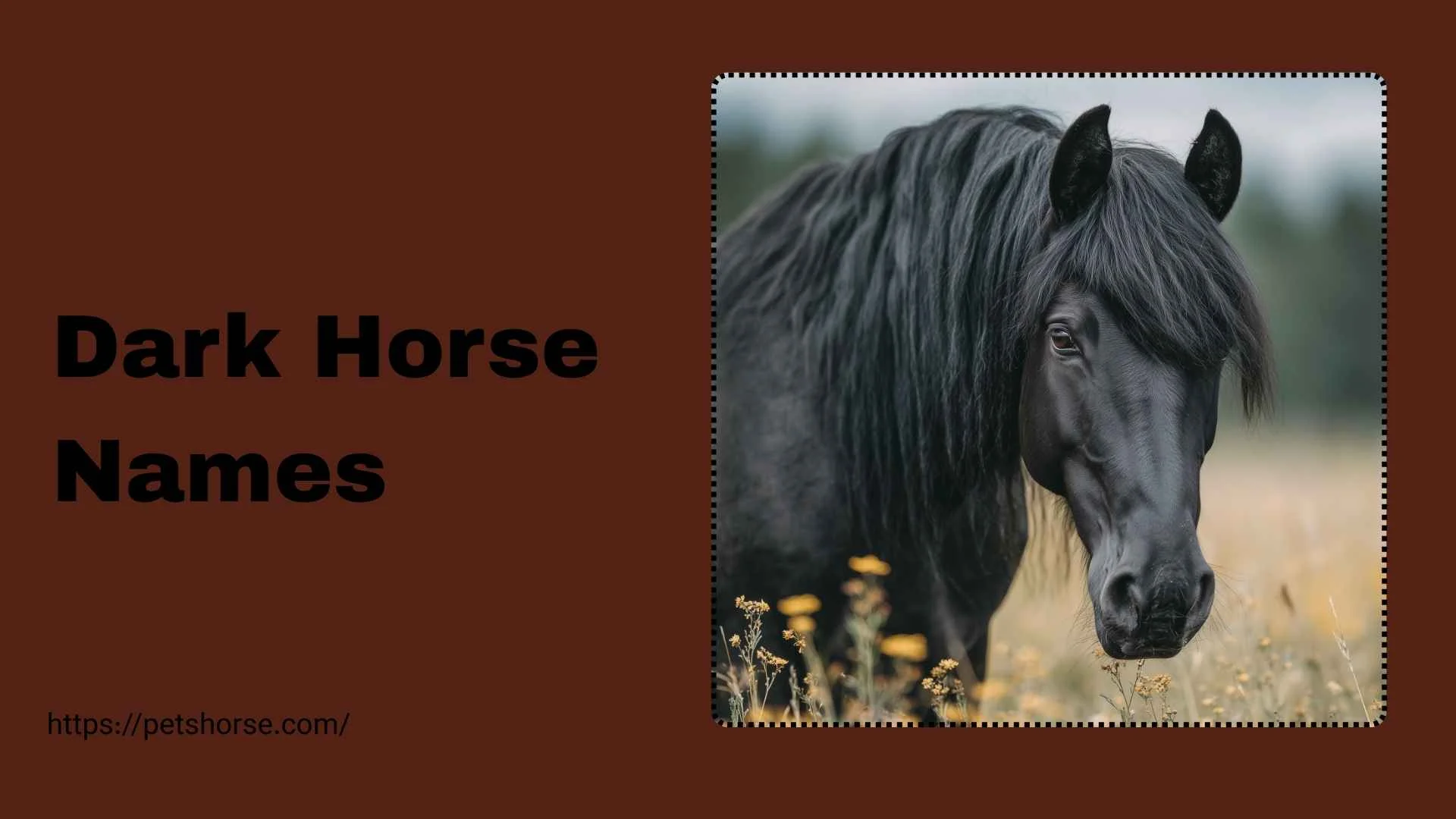
Choosing the perfect name for a horse is a timeless tradition that bridges the gap between human and equine.
When dealing with a “dark horse,” the task carries an extra layer of intrigue. In equestrian terms, a dark horse might literally be a stunning black Friesian, a deep seal brown Thoroughbred, or a smoky grullo Quarter Horse. Culturally and historically, however, a “dark horse” represents a hidden gem the unexpected competitor who emerges from the shadows to win it all.
Throughout history, from Alexander the Great’s fierce black stallion Bucephalus to the legendary warhorses of medieval knights, dark-coated equines have symbolized power, mystery, elegance, and untapped potential.
The right name should honor both the physical beauty of your horse’s deep coat and the enigmatic spirit within.
In this ultimate semantic guide, we break down over 400 meticulously curated dark horse names, complete with origins, meanings, and cultural significance, ensuring your companion receives a name worthy of its legacy.
Featured Snippet Section
What Are The Best Dark Horse Names?
The best dark horse names balance physical traits with symbolic depth. Top choices include Vader (German for “father,” evoking dark power), Midnight (representing the peak of night), Eclipse (the celestial blocking of light), and Obscura (Latin for hidden or dark), which perfectly capture an enigmatic, powerful equine persona.
How Do You Choose The Perfect Horse Name?
- Observe Physical Nuances: Note if the coat is true jet-black, sun-faded raven, deep chestnut, or smoky charcoal.
- Evaluate Temperament: Match a fiery, spirited horse with a powerful name (like Volcano) and a calm soul with something serene (like Sable).
- Test Articulation: Ensure the stable name is easy to call out in the pasture (one or two syllables work best).
- Verify Registry Rules: If registering with organizations like the AQHA or Jockey Club, ensure the name fits within character limits and naming guidelines.
The Ultimate Horse Naming Guide
Understanding the distinction between a horse’s everyday name and its official title is crucial for any equestrian.
- Stable Names: Also known as “barn names,” these are the casual, affectionate monograms used daily. They are short, easy to pronounce, and typically emphasize the horse’s day-to-day personality or a shortened version of their formal name (e.g., calling a horse “Noir” around the barn).
- Registered Names: These are the formal titles recorded with breed registries (such as the American Quarter Horse Association, Friesian Horse Association, or The Jockey Club). These names are highly stylized, often combining the lineage of the sire and dam, containing up to 18–30 characters, and tracking the horse’s official show or racing career.
When naming a dark horse, inspiration flows naturally from three distinct pillars: Breed Heritage (such as choosing a sleek Dutch name for a Friesian), Coat Tone (ranging from deep obsidian to rich espresso), and Personality (the mysterious quietude or explosive power that defines the “dark horse” archetype).
Main Dark Horse Name Categories
Elegant & Luxury Dark Horse Names
For horses that carry themselves with aristocratic grace, high-end presence, and fluid movement.
- Blackberry: English. A rich, sweet dark fruit; ideal for a gentle, deep-colored mare with a sweet disposition.
- Cabernet: French. Inspired by the deep, dark red-black wine grape; suits a sophisticated, high-class warmblood.
- Cadillac: French/American. Symbolizing premium luxury and a smooth, effortless stride.
- Cashmere: Himalayan origin. Representing ultra-luxurious, soft, and highly prized dark wool; reflects a flawless, glossy coat.
- Caviar: Persian. A rare, luxury delicacy consisting of dark sturgeon roe; fits a highly valuable, elite show horse.
- Chanel: French. Named after the iconic fashion house famous for the “little black dress”; embodies timeless elegance.
- Domino: Latin. Meaning “lord” or “master,” also referencing the black-and-white luxury gaming pieces; great for a dark horse with white markings.
- Donatella: Italian. Meaning “beautiful gift”; tailored for an elegant, high-stepping dark mare.
- Ebony: Egyptian. A dense, premium dark wood used for royalty; denotes absolute strength and deep coloration.
- Emperatriz: Spanish. Meaning “Empress”; a commanding, luxurious name for a majestic Andalusian or Lusitano mare.
- Espresso: Italian. Dark, concentrated, and full of rich energy; perfect for a sharp, quick-moving dark horse.
- Guinness: Irish. Named after the iconic, dark stout beer; suits a strong, sturdy horse with a rich heritage.
- Indigo: Greek. A deep, rich dark blue-purple dye historically reserved for royalty.
- Lexus: Greek origin. Meaning “defender of persons,” associated with modern luxury and aerodynamic speed.
- Majesty: Latin. Representing royal bearing, supreme authority, and breathtaking physical presence.
- Merlot: French. A smooth, dark wine grape whose name derives from the old French word for “young crow.”
- Midnight Lace: English. Combining the darkness of night with intricate, delicate textile work; perfect for a refined mare.
- Noir: French. The literal word for “black,” carrying an air of cinematic mystery and high fashion.
- Obsidian: Latin. A volcanic glass that is deep, glossy, and razor-sharp; fits a striking horse with a mirror-like coat.
- Onyx: Greek. A precious, banded gemstone of deep black hue; implies structural strength and shielding energy.
- Opulence: Latin. Meaning wealth, luxury, and abundance; perfect for a horse that turns heads in the arena.
- Sable: Slavic. A highly prized, dark, lustrous fur; denotes a coat that is exceptionally soft and deep in tone.
- Saffron: Arabic. A rare, highly valuable spice extracted from autumn crocus flowers; fits an fascinating, dark-toned horse.
- Stallion: Germanic origin. Referring to an ungelded male horse, but used metaphorically to denote peak masculine power and beauty.
- Truffle: French. A rare, highly sought-after subterranean fungus of deep color; represents hidden luxury.
- Velvet: Latin. A woven, tufted fabric with a distinctive soft pile; captures the feel of a perfectly groomed summer coat.
Unique & Rare Dark Horse Names
Stand out in the arena with these uncommon names derived from rare terms, science, and linguistics.
- Asphalt: Greek. A dark, dense, unbreakable binding material; ideal for a tough, unstoppable trail or ranch horse.
- Bramble: Old English. A prickly, wild dark-berry shrub; fits a rugged horse with a sharp, independent spirit.
- Carbon: Latin. The elemental building block of life and diamonds; denotes core strength and pure black composition.
- Cinder: Old English. The fragment of incombustible matter left after a fire; suits a horse with a dark gray-black coat.
- Coal train: English. A heavy-duty locomotive pulling fuel; matches a powerful draft horse or a relentless puller.
- Cosmo: Greek. Meaning “the universe,” referencing the vast, dark expanse of outer space.
- Creole: French/Spanish. A vibrant blend of cultures, often associated with rich, dark culinary heritages and deep colors.
- Crow: Old English. A highly intelligent, adaptive black bird; fits an exceptionally smart, observant horse.
- Darth: Invention. Derived from cinematic lore to signify dark leadership; perfect for a dominant herd leader.
- Eclipse: Greek. The celestial phenomenon where light is temporarily obscured by a dark body.
- Graphite: Greek. A crystalline form of carbon used for writing and strength components; suits a dark grey or steel-shaded horse.
- Inky: English. Reminiscent of deep writing fluid; highly fitting for a horse with a pure, unblemished dark coat.
- Ironclad: English. Protected by heavy iron shielding; symbolizes a horse with absolute resilience and an iron will.
- Kodiak: Alutiiq. Named after the massive, powerful Alaskan brown bear; ideal for a large, dark, and imposing horse.
- Magma: Greek. Liquid rock beneath the Earth’s crust; represents a dark exterior hiding a fiery, explosive energy.
- Nightfall: English. The dramatic, quiet transition from day to night; fits a calm, steady horse.
- Pecan: Algonquin. A rich, dark-shelled nut; perfectly suited for a deep brown or bay horse.
- Raven: Old English. A large, glossy black bird known for complex problem-solving and ancient prophecy.
- Silhouette: French. The dark outline of a subject against a lighter background; emphasizes flawless conformation.
- Smoky: English. Carrying the hazy, dark-gray coloration of wood smoke; fits a grullo or smoky black horse.
- Sooty: English. Covered in or colored by deep wood ash; ideal for a horse with dark dapples or shaded counter-shading.
- Tarzan: Literary. Meaning “White Skin” in fictional ape-language, but culturally representing raw, wild, untamed jungle power.
- Thunderhead: English. The dark, churning upper portion of a storm cloud; portends massive power and energy.
- Twilight: Old English. The soft, ambient light cast when the sun is just below the horizon; fits a peaceful dark horse.
- Umbra: Latin. The innermost and darkest part of a shadow; a deeply mysterious and unique name.
- Vader: Dutch. Meaning “Father,” permanently linked to cinema’s ultimate dark commander.
Cool & Powerful Dark Horse Names
For bold, athletic horses that exude confidence, speed, and high impact.
- Ace: Latin. Meaning “one” or “first class”; suits a top-tier performer who always comes out on top.
- Black Jack: English. A famous card game of skill and chance, also a historic term for a tough leather drinking vessel.
- Blackout: English. A total loss of power or light; denotes an overwhelming presence that shuts down the competition.
- Blitz: German. Meaning “lightning”; perfectly fits a dark horse with explosive, shocking speed.
- Bolt: Old Norse. A weapon of lightning or a sudden arrow-like sprint; captures rapid acceleration.
- Breaker: Old English. A massive wave that shatters on the shore; denotes an unstoppable, kinetic force.
- Bullet: French. A sleek, aerodynamic projectile built for maximum speed and impact.
- Charcoal: Old English. Dark, burnt wood used for filtration and art; matches a solid, matte-black coat.
- Chaser: English. One who pursues relentlessly; a phenomenal name for a racehorse or barrel racer.
- Diesel: Germanic. A heavy-duty, high-torque engine fuel; symbolizes raw, unyielding pulling power.
- Flint: Old English. A hard, dark sedimentary rock used to spark fires; reflects a tough, spark-igniting personality.
- Gunner: Scandinavian. Meaning “bold warrior”; highly suited for a courageous ranch or trail horse.
- Jaguar: Indigenous American. A stealthy, powerful dark-spotted apex predator built for speed and agility.
- Jet: French. A hard, intensely black mineral used for jewelry; also denotes modern, high-speed aviation.
- Maverick: American. An independent individual who refuses to conform; great for a spirited, free-thinking horse.
- Ninja: Japanese. A covert agent specialized in stealth, agility, and operating seamlessly within the shadows.
- Nitro: Greek. Short for nitroglycerin; a volatile compound that delivers explosive, high-energy output.
- Panther: Greek. A powerful, sleek melanistic apex predator that hunts in the dark.
- Ranger: French. A guardian of nature and vast territories; fits a dependable, enduring trail horse.
- Rebel: Latin. One who fights against established constraints; ideal for a spirited or challenging horse.
- Rider: Old English. A traveler on horseback; honors the classic symbiotic bond between human and equine.
- Rogue: French. A fiercely independent operator who breaks from the herd; suits a horse with character.
- Shadow: Old English. A dark image cast by a body intercepting light; a classic, timeless dark equine moniker.
- Spade: Latin. A sharp digging tool, or the highest suit in a deck of cards representing wisdom and transformation.
- Stealth: Old English. The art of moving silently and invisibly; perfect for a quiet, smooth-striding horse.
- Steel: Proto-Germanic. An iron alloy built for absolute structural endurance and cutting power.
- Storm: Old English. A violent disturbance of the atmosphere; captures a tempestuous, powerful horse.
- Viper: Latin. A venomous, lightning-fast striking serpent; denotes sharp reflexes and agility.
Mythological & Fantasy Dark Horse Names
Draw from ancient pantheons, folklore, and epic fantasy lore to give your horse a legendary aura.
- Anubis: Egyptian. The jackal-headed deity of the underworld who guided souls through the dark; highly mysterious.
- Aragorn: Literary (Tolkien). The heroic ranger and ultimate rightful king who emerged from the wilderness shadows.
- Ares: Greek. The volatile god of war, representing raw physical power, courage, and tactical dominance.
- Artemis: Greek. The goddess of the wilderness, wild animals, and the moon; beautiful for a dark, independent mare.
- Aslan: Turkish/Literary. Meaning “Lion”; a noble, righteous leader who conquers darkness.
- Athena: Greek. The goddess of wisdom, strategic warfare, and handicraft; suits an exceptionally intelligent mare.
- Azrael: Hebrew. The angel of transition and transformation who guides souls through the dark.
- Batman: Pop Culture. The dark knight protector who operates from the shadows to enforce justice.
- Beast: Latin origin. A powerful, untamed creature of immense physical capability and wild nature.
- Chernobog: Slavic. The ancient “Black God,” representing the mysterious and powerful forces of the night.
- Dracula: Romanian. Meaning “Son of the Dragon,” permanently tied to the elegant, dark ruler of folklore.
- Erebus: Greek. The primordial deity representing the personification of deep darkness and shadows.
- Gandalf: Old Norse/Literary. Meaning “Wand-elf,” representing ancient wisdom, magic, and enduring strength.
- Hades: Greek. The ruler of the underworld and keeper of hidden earthly wealth; a commanding name.
- Hecate: Greek. The goddess of magic, witchcraft, the night, and crossroads; mysterious and deep.
- Hercules: Latin. The legendary hero of unmatched physical strength who overcame impossible labors.
- Hermes: Greek. The swift messenger god of transitions and boundaries; excellent for a fast, clever horse.
- Loki: Old Norse. The trickster deity of Norse mythology; ideal for a clever, mischievous dark horse.
- Lucifer: Latin. Meaning “Light-bringer,” referencing the morning star before its descent into darkness.
- Merlin: Welsh. The ultimate legendary wizard of Arthurian lore, representing ancient arcane knowledge.
- Morgana: Celtic. A powerful, dark sorceress of Arthurian legend; carries an enchanting, mysterious vibe.
- Morrigan: Celtic. The ancient phantom queen of battle, fate, and ravens; deeply powerful name for a mare.
- Nixie: Germanic. A water sprite known for shape-shifting and dwelling in deep, dark pools.
- Odin: Old Norse. The All-father god of wisdom, war, poetry, and magic; fits a wise, majestic stallion.
- Osiris: Egyptian. The lord of the afterlife, rebirth, and agriculture; symbolizes endurance beyond limits.
- Pluto: Latin. The Roman god of the deep underworld and hidden minerals; carries vast weight.
- Sauron: Literary (Tolkien). The ultimate dark lord of epic fantasy, representing absolute dominion and focus.
- Thor: Old Norse. The hammer-wielding god of thunder, lightning, and raw physical protection.
- Titan: Greek. A race of powerful, primordial deities who preceded the Olympians; signifies immense size.
- Zeus: Greek. The king of the gods, ruler of Mount Olympus, and master of the sky and thunderbolts.
Western & Cowboy Dark Horse Names
Rooted in ranch culture, frontier law, and the rugged landscape of the American West.
- Apache: Zuni/Yuman. Named after the fierce, highly skilled Native American group of the Southwest known for equestrian excellence.
- Bandit: Italian. An outlaw or robber operating outside the law; great for a horse with a mischievous streak.
- Boots: English. Crucial leather footwear for cowboys; a friendly, grounded name for a dependable partner.
- Bronco: Spanish. Meaning “rough” or “wild”; represents an untamed, high-spirited horse.
- Cheyenne: Algonquin. Meaning “people of a different language,” named after the iconic Western plainsgroupand territory.
- Chisum: American. Named after John Chisum, the legendary cattle baron of the American frontier.
- Cochise: Apache. The famous, brilliant leader of the Chihuicahui local group of the Chokonen Apache.
- Colt: Old English. A young male horse; also references the historic revolver that “won the West.”
- Cowboy: English. The ultimate symbol of frontier work, cattle driving, and rugged individualism.
- Dakota: Sioux. Meaning “friend” or “ally”; a fantastic, loyal name named after the vast northern plains.
- Dallas: Scottish. Meaning “meadow dwelling,” forever tied to the historic Texas cowboy hub.
- Desperado: Spanish. A bold, reckless outlaw of the old West; fits a daring, forward-moving horse.
- Geronimo: Apache/Spanish. The legendary Apache leader known for his unmatched bravery and resistance.
- Jesse: Hebrew. Meaning “gift,” inspired by the infamous Western outlaw Jesse James.
- Laramie: French. Named after Jacques LaRamie, a historic fur trapper; synonymous with classic Western expanses.
- Montana: Spanish. Meaning “mountainous”; invokes images of wild, wide-open dark pine forests.
- Outlaw: Old English. One who operates beyond societal rules; perfect for a powerful, non-conforming horse.
- Pecos: Keresan. Named after the wild River basin in Texas and New Mexico; captures a rugged essence.
- Rawhide: English. Untanned cattle skin used for whips and lassos; denotes extreme physical toughness.
- Remington: Old English. A historic American firearms manufacturer; carries a sharp, reliable Western weight.
- Ringo: English. Inspired by Johnny Ringo, the notorious cowboy outlaw of Tombstone fame.
- Sundance: American. Named after the Sundance Kid, the famous charismatic outlaw partner of Butch Cassidy.
- Tex: American. A classic shorthand for Texas, representing the ultimate cowboy heritage.
- Wrangler: Germanic. A handler of horses and livestock on the range; honors the working equestrian lifestyle.
- Wyatt: Old English. Meaning “brave in battle,” honoring Wyatt Earp, the legendary lawman of the OK Corral.
Breed-Specific Dark Horse Names
Certain breeds are renowned for their dark coats. Matching the name to the breed’s cultural origin creates deep semantic harmony.
[ Friesian ] ———> Dutch Roots (e.g., Gijs, Femke)
[ Thoroughbred ] ——> Racing & Royalty (e.g., Eclipse, Dark Angel)
[ Quarter Horse ] —–> Western Grit (e.g., Charcoal, Midnight Cash)
Friesian Horse Names (Dutch Roots)
Friesians are born black, known for their high-stepping action, majestic feathering, and thick manes.
- Femke: Dutch. Meaning “little girl” or “peace”; a classic, elegant name for a sweeping Friesian mare.
- Gijs: Dutch. Meaning “bright pledge”; a strong, traditional name for a proud, pure-black gelding.
- Hendrik: Dutch. Meaning “home ruler”; suits a dominant, majestic Friesian stallion.
- Jasper: Persian/Dutch. Meaning “treasurer,” a highly popular name in the Netherlands for a prized horse.
- Sjoukje: Frisian. A traditional regional name meaning “peace and victory”; honors the breed’s native land.
Thoroughbred & Racehorse Names (Aura of Speed)
Thoroughbreds excel in athleticism, stamina, and competitive drive.
- Dark Angel: English. Suggests a beautiful, ethereal competitor with blinding, uncatchable speed.
- Eclipse: Historical. Named after the 18th-century undefeated foundational Thoroughbred racehorse.
- Night Runner: English. Evokes images of a sleek athlete training effortlessly under the moonlight.
- Phantom Speed: English. Suggests a dark horse that glides past competitors like a ghost.
- Shadow Fax: Literary. Inspired by the lord of all horses, built for limitless endurance and speed.
Personality-Based Dark Horse Names
For Fast & Spirited Horses
- Arrow: Old English. Sleek, straight, and shot from a bow at breakneck speed.
- Cyclone: Greek. A rotating, destructive storm system; fits an explosive barrel racer or sprinter.
- Dash: French. To move with sudden, rapid acceleration; simple and highly effective.
- Flash: English. A sudden burst of bright light; ironic and powerful for a dark horse that moves like lightning.
- Rocket: Italian. A high-velocity jet propulsion vehicle designed to break boundaries.
For Gentle & Loyal Horses
- Buddy: English. A universal term for a close, trusted friend and reliable partner.
- Gideon: Hebrew. Meaning “great warrior,” but traditionally associated with quiet, humble resolve.
- Honey: Old English. Sweet, smooth, and deeply comforting; perfect for a dark brown horse with a soft heart.
- Teddy: French/Greek. Short for Theodore (“gift of God”), evoking the comfort of a gentle teddy bear.
- Velvet: Latin. Evoking a soft, soothing touch; suits a horse that loves grooming and human contact.
Famous Horse Naming Inspiration
Look to history, literature, and cinema to find a name with built-in authority and cultural recognition.
Legendary & Historical Horses
- Bucephalus: Alexander the Great’s legendary black stallion. The name means “ox-head,” hinting at his broad forehead and fierce, untamable nature until Alexander won his trust.
- Black Beauty: The protagonist of Anna Sewell’s classic 1877 novel. This name represents ultimate equestrian empathy, resilience, and classic beauty.
- Cincinnati: Ulysses S. Grant’s famous dark chestnut Civil War charger, known for his immense stature and fearlessness under artillery fire.
- Sargent Reckless: While a chestnut mongrel mare, her name represents the ultimate “dark horse” story—a military pack horse who became a decorated marine hero.
Pop Culture & Fiction
- Gollum: Tolkien. For a quirky, highly unusual dark horse with an intense, laser-focused gaze.
- Kylo: Star Wars. Named after Kylo Ren; suits a powerful, intense young horse with a dark aesthetic and spirited temperament.
- Zorro: Spanish. Meaning “Fox,” named after the fictional black-masked vigilante who rode the brilliant black stallion Toronado.
Expert Tips for Naming Your Dark Horse
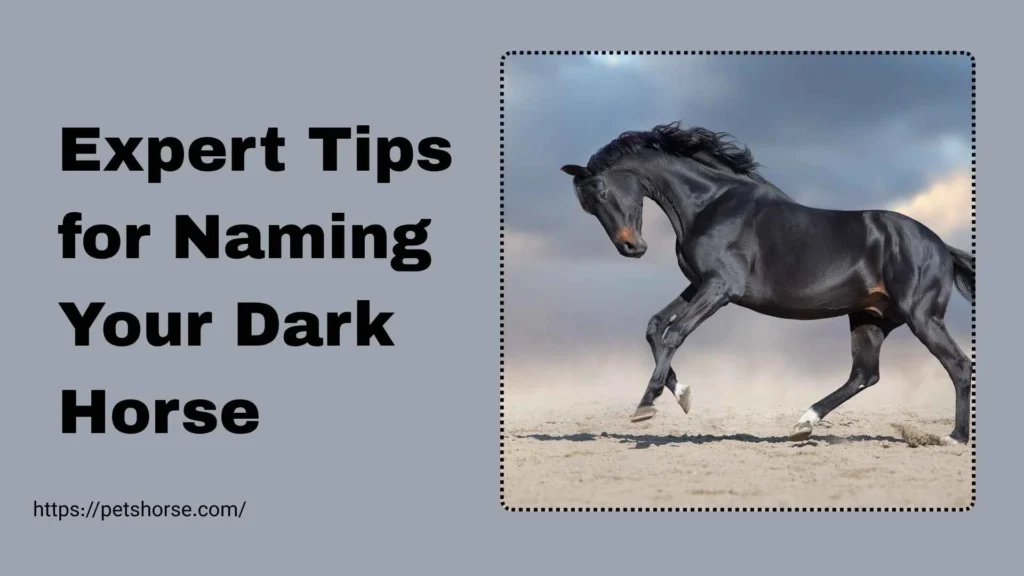
Naming rules vary by breed association. For instance, The Jockey Club restricts Thoroughbred names to 18 characters (including spaces) and bans names of famous living people without permission. The AQHA allows up to 30 characters. Always check your registry’s rulebook before finalizing a show name.
- The Two-Syllable Rule: Choose a stable name that can be shouted clearly. Words with one or two syllables (like Jet or Shadow) are easier for horses to distinguish and react to during ground work or pasture calling.
- Match the Heritage: If you have an imported breed like a Percheron (French) or a Hanoverian (German), utilizing names from their native language preserves historical continuity and adds professional polish.
- Test for Confusion: Ensure the name doesn’t sound identical to basic training cues. For example, naming a horse “Whoa-en” (Owen) or “Beau” can cause subtle confusion during lunging or riding when giving the command “Whoa.”
Common Horse Naming Mistakes to Avoid
- Choosing Trend-Heavy Names: Pop culture names can age rapidly. A name based on a current viral trend might feel outdated in five years of a horse’s 25-plus-year lifespan.
- Ignoring Pronunciation Friction: If judges, announcers, or barn managers cannot easily pronounce your horse’s registered name, it can cause unnecessary friction at check-ins and awards ceremonies.
- Overusing Generic Terms: Names like “Blackie” or “Midnight” are incredibly common. While classic, adding a unique modifier (e.g., Midnight Cash) helps your horse stand out in database registries.
The Final Horse Name Checklist
Before writing that name down on official registration papers, run through this comprehensive quality check:
- [ ] Easy to Pronounce: Can a show announcer say it correctly on the first try?
- [ ] Matches Personality: Does it fit their internal drive and spirit?
- [ ] Fits Appearance: Does the name honor their specific shade of dark coat?
- [ ] Memorable: Does it stand out among thousands of basic equine names?
- [ ] Meaningful: Is there a story, origin, or translation behind it?
- [ ] Suitable for Competitions: Does it sound professional in an arena environment?
- [ ] Family-Approved: Is the barn name friendly for equestrians of all ages?
Frequently Asked Questions
What are the most popular names for black horses?
The most enduringly popular names for black horses are Midnight, Shadow, Onyx, Jet, and Eclipse. These names have remained favorites for decades because they instantly communicate the deep, dramatic visual profile of a dark-coated horse.
How do racehorses get their registered names?
Racehorse names are assigned based on strict rules by registries like The Jockey Club. Owners typically combine elements of the sire’s (father) and dam’s (mother) names, keep the length under 18 characters, and ensure the name is completely unique within the active racing database.
What is a good name for a strong male dark horse?
Vader, Ironclad, Bucephalus, and Titan are exceptional choices. These names carry historical, elemental, or cultural weight that matches a stallion or gelding with massive bone structure and a powerful presence.
What are elegant female dark horse names?
For a refined mare, Sable, Cabernet, Opulence, and Artemis offer a beautiful blend of luxury, soft texture imagery, and classical mythology that highlights fluid movement and beauty.
Can two horses have the exact same name?
In a casual barn setting, yes. However, within official breed registries (like the AQHA or Jockey Club), duplicate names are strictly prohibited to prevent confusion in breeding lines, racing charts, and official competition results.
Conclusion
A dark horse is more than just an animal with a deep coat; it is a symbol of mystery, unexpected triumph, and profound elegance. Whether you choose a name rooted in the high-end luxury of Obsidian, the rugged western grit of Wyatt, or the deep mythological power of Anubis, ensure the name honors your horse’s unique soul. Take your time, test how it sounds across the pasture, and select a title that will proudly define your equine partner for a lifetime.

 Olivia Carter
 Ethan Williams