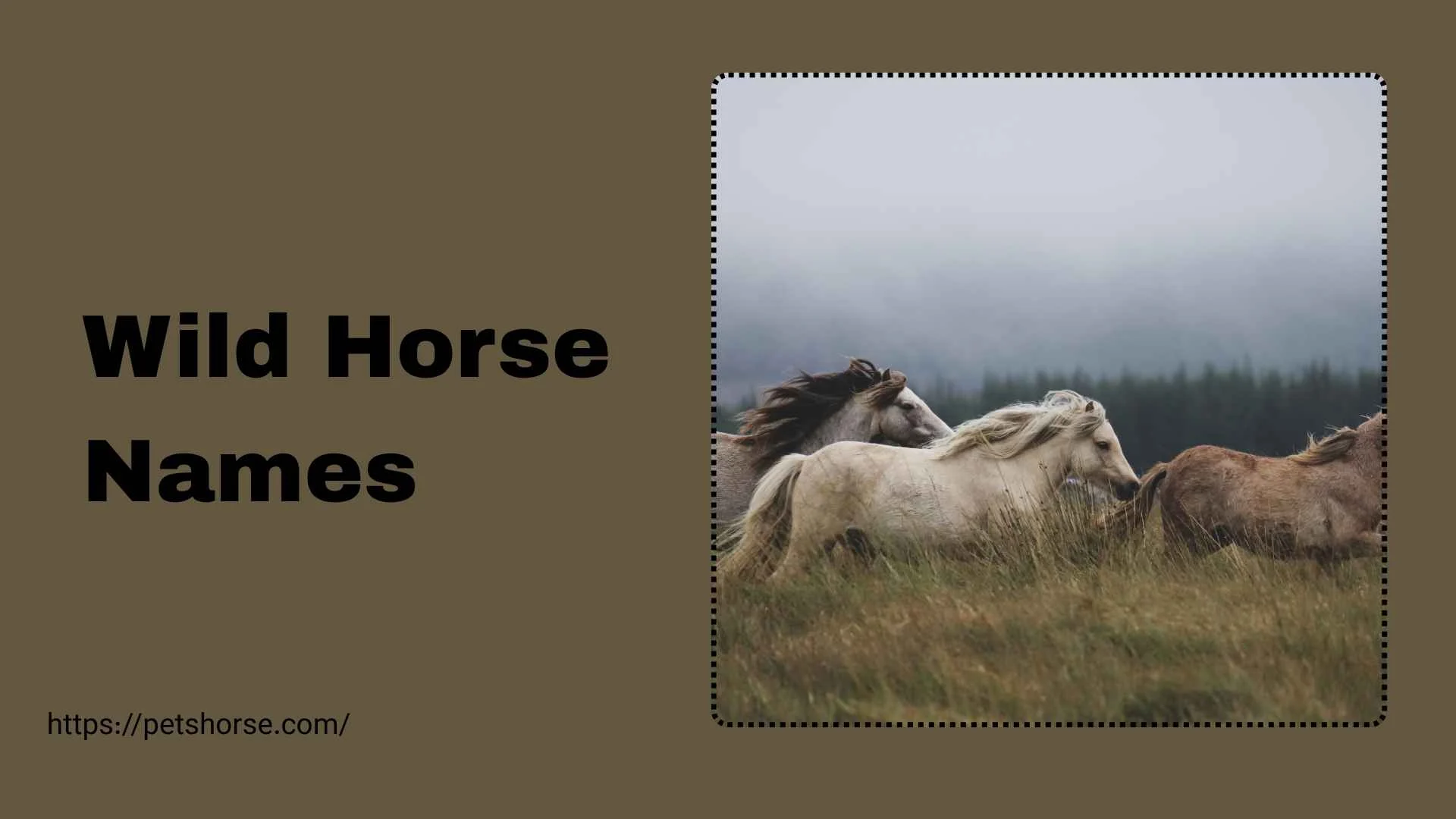
Choosing a name for a wild horse or a horse with an untamed, spirited soul is about capturing the essence of freedom, raw power, and the open horizon. Unlike stable-born horses, wild horses, free-roaming mustangs, and spirited equines carry an energy shaped by the wind, rugged terrains, and survival.
Whether you are naming a newly adopted BLM (Bureau of Land Management) Mustang, a spirited colt with a wild streak, or looking for a powerful name rooted in nature, history, and mythology, this guide offers an authoritative, semantically rich resource.
Every single name below includes its origin, deeper meaning, and cultural symbolism to help you find the perfect match.
What Are The Best Wild Horse Names?
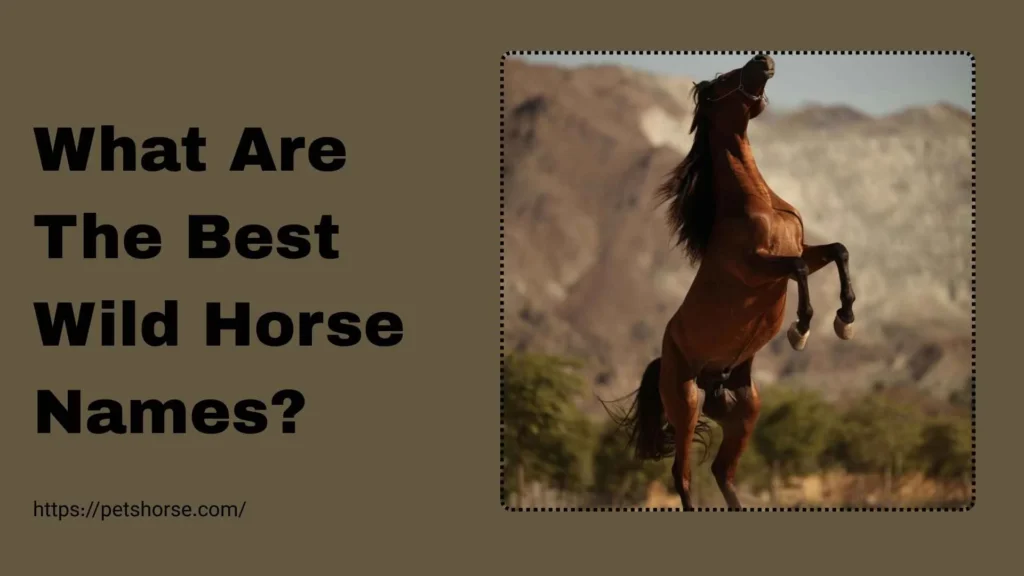
The best wild horse names capture the spirit of freedom, strength, and the natural world. Top choices include Maverick (meaning an independent free spirit), Sienna (representing the earthy clay of open plains), and Zephyr (a powerful west wind). The ideal name honors the horse’s untamed heritage and striking physical presence.
How Do You Choose The Perfect Wild Horse Name?
- Observe Behavior: Look for traits like bold leadership, skittish caution, or playful energy.
- Assess the Coat: Match names to natural land elements (e.g., Flint for grey, Sierra for chestnut).
- Test Callability: Choose a short, 1-to-2 syllable name that easily carries across an open pasture.
- Honor Heritage: Look to geography, native plants, and meteorological phenomena for authentic ties.
The Wild Equine Naming Guide
Naming a wild or free-spirited horse requires a different approach than naming a show horse or a pampered backyard gelding. In equine behavioral science, wild horses rely heavily on herd dynamics, sharp instincts, and environmental adaptability. Their names should reflect this raw, survivalist nature.
Barn Names vs. Registered Names
If your horse is a captured and adopted Mustang, or a registered breed with a wild lineage (like the American Quarter Horse or Appaloosa), they may require two names:
- Registered Name: The official name recorded with breed registries (up to 18-21 characters depending on the association). For wild-caught horses, this often combines their capture herd management area (HMA) with a poetic phrase (e.g., Steens Mountain Renegade).
- Barn/Stable Name: The everyday call name. This is what you yell across the paddock. It should be punchy, rhythmic, and distinct enough for the horse to recognize auditory cues.
The Power of Personality and Environment
Wild horses aren’t blank slates. When observing a horse with a wild background, look for their role in the herd:
- The Alpha Mare: Watchful, fiercely protective, intelligent, and leading the herd to water.
- The Band Stallion: Strong, visually imposing, alert, and driving the herd from behind to protect them from predators.
- The Free Spirit: Lone roamers or high-energy yearlings who constantly test boundaries.
Ultimate Wild Horse Names Category Guide
Every name in this curated directory has been selected for its semantic relevance to wild landscapes, free-roaming heritages, and untamed natural elements.
Powerful & Strong Wild Horse Names (For Leader Equines)
| Name | Origin | Meaning & Significance for a Wild Horse |
| Bandit | English | An outlaw or robber. Perfect for a horse that breaks fences or displays a cunning, rebellious streak. |
| Goliath | Hebrew | Giant or champion. Best suited for a massive, heavy-boned wild stallion or draft cross. |
| Maverick | American | An unorthodox, independent-minded individual. The quintessential name for an unbroke or fiercely independent horse. |
| Outlaw | Old English | Someone outside the protection of the law. Ideal for a horse with an fierce, defiant personality. |
| Raider | Germanic | An invader or warrior. Suited for a dominant horse that asserts control over the pasture or herd. |
| Renegade | Spanish | A deserter or rebel. Captures the essence of a horse that refuses to be broken easily. |
| Saber | French | A heavy cavalry sword. Symbolizes sharp reflexes, power, and a cutting visual presence. |
| Titan | Greek | A person or thing of colossal strength. Inspired by the ancient deities who ruled before the Olympians. |
| Vanguard | Old French | The foremost part of an advancing army. Great for a bold trail leader who always wants to be in front. |
| Wrangler | American | A handler of animals or free-roaming livestock. Honors the gritty cowboy heritage of the American West. |
Nature & Wilderness Inspired Names
| Name | Origin | Meaning & Significance for a Wild Horse |
| Arroyo | Spanish | A dry creek bed that fills with water after rain. Perfect for a sandy-colored horse or one found in desert landscapes. |
| Canyon | Spanish | A deep gorge typically with a river flowing through it. Evokes the rugged, deep red-rock vistas of the American Southwest. |
| Flint | Old English | A hard grey rock used to spark fire. Excellent name for a steel-grey or blue roan horse with a tough disposition. |
| Mesa | Spanish | An isolated flat-topped hill with steep sides. Represents stability, grandeur, and open plateau country. |
| Ridge | Old English | A long narrow hilltop or mountain range. Suits a tall, sharp-withered horse that loves high ground. |
| River | English | A natural flowing watercourse. Represents fluid movement, constant adaptation, and unyielding momentum. |
| Sahara | Arabic | The great desert. A beautiful name for a light palomino or dun horse with an expansive presence. |
| Sierra | Spanish | A jagged mountain range. Evokes the snow-capped heights of western ranges where wild herds roam. |
| Summit | Latin | The highest point of a hill or mountain. For a horse that strives to be at the top of the herd hierarchy. |
| Tundra | Russian | A vast, treeless Arctic region. Fits a hardy, thick-coated wild horse capable of surviving extreme winters. |
Weather & Element Horse Names
| Name | Origin | Meaning & Significance for a Wild Horse |
| Blizzard | English | A severe, blinding snowstorm. Perfect for an energetic, striking all-white horse or an unruly grey. |
| Cyclone | Greek | A system of winds rotating inward. Captures the chaotic, high-speed energy of a young, unbacked colt. |
| Gale | Old Norse | A very strong wind. Suited for a fast, light-footed horse that seems to glide effortlessly across fields. |
| Monsoon | Arabic | A seasonal shifting wind accompanied by heavy rain. Represents sudden, powerful changes in energy and presence. |
| Pyro | Greek | Fire or heat. A striking option for a fiery chestnut or red dun with an intense, spirited attitude. |
| Shadow | Old English | A dark area produced by a body coming between light rays. Classic name for a quiet, stealthy black or dark bay horse. |
| Storm | Germanic | A violent disturbance of the atmosphere. Fits a unpredictable horse with a booming personality and dark coat. |
| Thunder | Old English | The sound caused by lightning. Evokes the acoustic rumble of a galloping herd hitting hard-packed earth. |
| Typhoon | Chinese | A mature tropical cyclone. For a horse with a massive, unstoppable momentum when in motion. |
| Zephyr | Greek | The ancient personification of the west wind. A poetic, light name for a gentle yet free-spirited horse. |
Mythological & Sovereign Wild Names
| Name | Origin | Meaning & Significance for a Wild Horse |
| Apollo | Greek | God of music, truth, prophecy, and the sun. Magnificent choice for a bright golden palomino stallion. |
| Athena | Greek | Goddess of wisdom and strategic warfare. Ideal for an exceptionally intelligent, calculating alpha mare. |
| Baron | Old French | A nobleman of high rank. Suits a stately, calm horse that naturally demands respect from humans and herd-mates alike. |
| Chief | Old French | A leader or ruler of a people. Classic, commanding name for a dominant stallion with clear presence. |
| Duchess | Latin | A female noble holding a rank equal to a duke. Elegant name for a refined mare with a proud, high head carriage. |
| Kaiser | German | Emperor. A sharp, authoritarian name for a commanding horse that rules the paddock. |
| Odin | Old Norse | The supreme Norse god associated with wisdom, healing, and war. Fits a wise, battle-tested older gelding or stallion. |
| Sovereign | Old French | A supreme ruler possessing ultimate power. Captures the utter independence of a horse completely untamed by man. |
| Thor | Old Norse | The hammer-wielding god of thunder and strength. Great for a heavy, muscular horse with a powerful stride. |
| Valkyrie | Old Norse | Maiden sent by Odin to choose who dies in battle. A fierce, unforgettable name for a bold, athletic wild mare. |
Breed-Specific Wild Horse Names
While any horse can have a wild spirit, certain breeds are historically linked to free-roaming populations, rugged survivalism, or legendary battlefield stamina.
Mustang & Wild Bureau of Land Management (BLM) Herds
Mustangs are the living symbols of the American West, descended from horses brought by Spanish Conquistadors.
- Cimarron: Spanish origin meaning wild, untamed, or runaway. This directly refers to the historic feral herds of North America.
- Kiger: Named after the Kiger HMA in Oregon, famous for preserving high percentages of original Spanish dun genetics.
- Pryor: Inspired by the Pryor Mountains wild horse herd on the Montana-Wyoming border, known for their early markings (zebra stripes on legs).
- Sundance: Evokes open plains, Native American sun dance ceremonies, and historical outlaw associations.
- Steens: Named after Steens Mountain in Oregon, a rugged landscape home to highly sought-after, athletic wild herds.
Arabian-Inspired Names (Desert & Wind Origins)
Arabian horses are the oldest purebred line, forged by the harsh, wide-open environments of the Arabian Peninsula.
- Bedouin: Nomadic desert dwellers who bred these horses for extreme endurance, loyalty, and survival in arid landscapes.
- Sirocco: A hot, dusty wind blowing from the North African desert across the Mediterranean.
- Asil: Arabic for purebred, noble, or authentic, representing the untouched integrity of the lineage.
- Nadir: Meaning rare or precious, capturing the value of a unique free-roaming spirit.
- Shamali: Arabic for northern wind, a beautiful option for a fast, elegant grey or white Arabian.
Thoroughbred & Expressive Race Names
Thoroughbreds possess an intense, hot-blooded drive to run, derived from foundational Arabian, Turkoman, and Barb stallions.
- Apex: Latin for the highest point or tip. Perfect for a horse driven to be at the absolute front of the pack.
- Velocity: Expresses raw speed and directional momentum, fitting for a horse that loves to gallop.
- Bold Ruler: Honors historic racing lineages, combining leadership traits with athletic dominance.
- Eclipse: Named after the legendary 18th-century undefeated racehorse, symbolizing a performance that darkens all competitors.
- Kinetic: Meaning relating to or resulting from motion, ideal for a high-energy equine that never stays still.
Color-Based Wild Names with Explanations
In the wild, a horse’s coat color is a critical survival trait, providing camouflage against rocky outcrops, desert sands, or deep forest shadows.
[Coat Color] ──► [Natural Counterpart] ──► [Wild Name Concept]
Black ──► Volcanic Glass ──► Obsidian
White ──► Arctic Water Vapor ──► Vapor / Glacier
Chestnut ──► Desert Earth/Fire ──► Ember / Sedona
Dun/Palomino ──► Arid Plains/Grasses ──► Savanna / Mojave
Black & Dark Coated Horses
- Obsidian: A dark, glassy volcanic rock formed by rapidly cooling lava. A striking name for a jet-black horse with a high-shine coat.
- Vader: Derived from the iconic dark leader, perfect for an intimidating, massive dark bay or black stallion.
- Midnight: The deepest hour of the night. A classic name for an elusive, midnight-black wild horse.
- Coal: Carbonized plant matter used for fuel. Represents compressed, burning energy hidden inside a dark exterior.
- Eclipse: The temporary obscuring of a celestial body. Fits a black horse with white markings that interrupt the dark canvas.
White & Grey Coated Horses
- Ghost: An elusive, pale spirit. Ideal for a wild grey horse that blends into the early morning mist or fog.
- Glacier: A massive, slowly moving body of ice. Represents cold, unyielding power and pristine white beauty.
- Vapor: Diffused matter suspended in the air. A lovely name for a light flea-bitten grey or fine-boned white mare.
- Frost: A deposit of small ice crystals. Great for a roan or grey horse whose coat looks dusted with winter ice.
- Chalk: A soft, white, porous sedimentary rock. Fits a matte-white horse with a calm, stoic disposition.
Chestnut, Red & Sorrel Coated Horses
- Ember: A glowing piece of coal or wood in a dying fire. Captures the deep, simmering red-gold tones of a rich chestnut.
- Sedona: Named after the famous Arizona desert town renowned for its towering, vibrant red sandstone formations.
- Copper: A ductile reddish-brown metal. A highly metallic name for a shiny sorrel with a gleaming summer coat.
- Phoenix: The mythical red-gold bird that rises from its own ashes. Symbolizes resilience and fiery rebirth.
- Sienna: An earth pigment containing iron oxide, producing a rich reddish-brown tone. Classic, artistic choice for a warm bay or chestnut.
Duns, Palominos & Buckskins (The early Shades)
- Mojave: Named after the vast, sun-drenched desert of the American Southwest. Fits a golden buckskin or dun perfectly.
- Savanna: A grassy plain in tropical regions with sparse trees. Evokes the sandy, warm tones of a palomino coat.
- Sundance: Highlighting the bright, golden rays of the sun reflecting off a light-colored horse moving at speed.
- Dune: A mound of sand formed by the wind. Beautiful name for an earthy, dun-colored horse with early leg barring.
- Aspen: Named after the tree known for its smooth, pale bark and brilliant golden leaves in autumn.
Famous & Historical Naming Inspiration
History and literature are rich with wild, legendary equines who shaped civilizations, won mythic battles, or symbolized absolute freedom.
- Bucephalus: The legendary stallion of Alexander the Great. His name means Ox-head, referring to his broad brow. He was notoriously wild and unmanageable until a young Alexander realized the horse was simply terrified of his own shadow.
- Pegasus: The winged horse of Greek mythology, born from the blood of Medusa. He represents poetic inspiration, flight, and an ascent into the heavens—the ultimate symbol of an unbound spirit.
- Copenhagen: The famous chestnut stallion ridden by the Duke of Wellington at the Battle of Waterloo. Known for his incredible stamina, he was reportedly so wild and high-spirited that he kicked at the Duke when he dismounted after a grueling 15 hours in the saddle.
- Comanche: A legendary mixed-breed horse who survived the Battle of the Little Bighorn. Found severely wounded on the battlefield, he became an icon of survival and resilience, honored as a living symbol of the old American frontier.
- Rocinante: Don Quixote’s famous steed. While historically a worn-out workhorse, the name carries a whimsical, deeply romanticized connection to old-world adventure and untamed imagination.
Expert Tips For Choosing Wild Horse Names
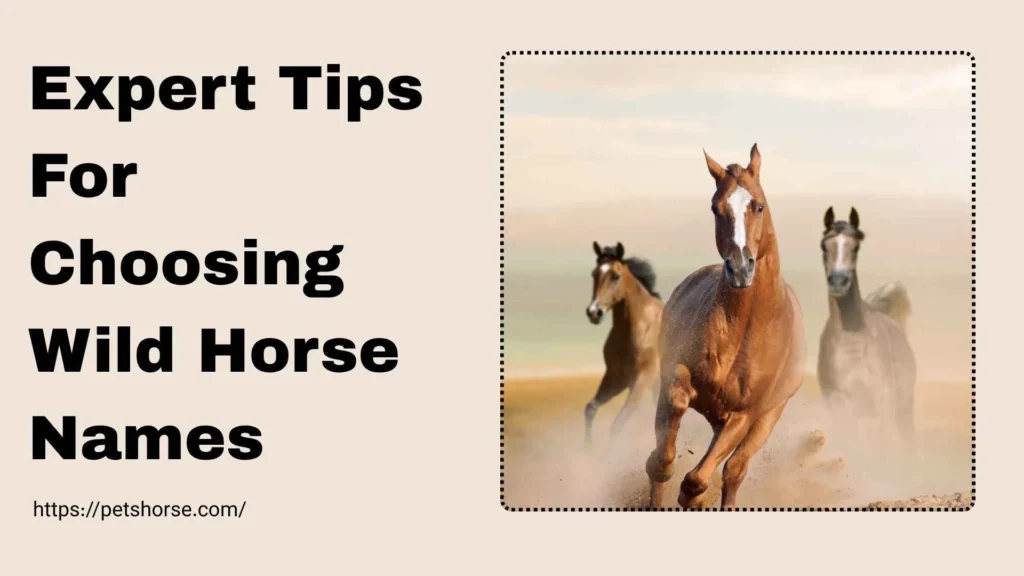
When dealing with a horse that has wild roots or an independent personality, veterinary and behavioral experts recommend keeping several practical guidelines in mind:
1. Match the Horse’s Social Rank
Avoid naming a shy, low-ranking herd member “Titan” or “Kaiser.” Conversely, a natural alpha mare who fiercely manages her pasture companions deserves a commanding title like “Athena” or “Vanguard.” Matching their name to their natural herd behavior creates a more authentic bond.
2. Test Auditory Cues and Syllables
Horses respond to the pitch, rhythm, and tone of human voices rather than the actual words.
- Keep it short: Two-syllable names with sharp consonants (like Bandit, Flint, Saber) are much easier for a horse to distinguish from background noise.
- The “Over-the-Fence” Test: Shout the name out loud outside. If it feels awkward to yell across a twenty-acre field, it’s too long or complex for a practical barn name.
3. Consider Breed Heritage and Legacy
If your horse is an adopted Mustang, choosing a name rooted in the geography of the West (like Arroyo or Mesa) honors their lineage. If you have an Iberian breed like an Andalusian or Lusitano, Spanish nature words provide an authentic nod to their evolutionary history.
Common Horse Naming Mistakes to Avoid
- Choosing Hard-to-Pronounce Names: If your vet, farrier, or stable manager cannot easily pronounce the name on the stall chart, it leads to confusion and miscommunication during critical moments.
- Ignoring Future Transitions: A cute name like “Baby Wild” might suit a spunky, small yearling colt, but it can feel incredibly mismatched when he grows into a muscular, 16-hand dominant gelding. Think long-term.
- Using Cliche Names Without Nuance: Names like “Spirit” or “Wildfire” are incredibly common in the equine community. Opting for related semantic variations like Zephyr or Ember gives your horse a distinct identity while keeping the core theme.
The Final Horse Name Checklist
Before finalizing your selection, run your favorite names through this operational checklist to ensure long-term viability:
[ ] Easy to pronounce under stress?
[ ] Fits the horse’s current or projected social rank?
[ ] Harmonizes with their coat color or natural markings?
[ ] Distinct from other horses’ names in the immediate barn?
[ ] Short enough to form a crisp auditory call cue?
[ ] Family-approved and suitable for competitive announcements?
Frequently Asked Questions
What are the most popular wild horse names?
The most popular names consistently include Maverick, Bandit, Spirit, Blaze, and Outlaw. These terms directly evoke the imagery of freedom, rebellion, and open-range survival that defines the equine wild.
How do adopted wild Mustangs get their names?
Adopted Bureau of Land Management (BLM) Mustangs are typically named by their adopters based on the Herd Management Area (HMA) where they were captured, combined with physical traits or behaviors noticed during gentling.
What are strong male names for a spirited horse?
Strong choices include Titan (strength), Renegade (rebel), Goliath (giant), and Vanguard (leader). These names use hard consonants that project authority and match a powerful physical presence.
What are elegant female names for a wild mare?
Elegant options include Sierra (mountain range), Athena (wise goddess), Zephyr (west wind), and Savanna (open plain). They capture grace without sacrificing the independent nature of a wild-born horse.
Can two horses have the same registered name?
No. Major breed registries like the American Quarter Horse Association (AQHA) or The Jockey Club have strict rules preventing duplicate registered names within their databases to ensure clean lineage tracking. However, everyday barn names can be duplicated across stables without issue.
Conclusion
Naming a horse with a wild soul is an opportunity to honor the enduring spirit of the untamed wilderness. By looking to rugged landscapes, meteorological events, ancient mythology, and historic legends, you can select a title that carries deep personal meaning and respects your equine’s heritage. Take your time, observe your horse under the open sky, and choose the name that echoes their true, free spirit.

I am Olivia Carter, a pet lover, animal naming researcher, and creative writer who loves helping people find the perfect names for their furry companions. I believe every pet has a unique personality, and the right name can reflect their character, appearance, and special bond with their family. Through my research and writing, I explore cute, unique, funny, and meaningful pet names inspired by nature, mythology, colors, personalities, and popular culture.
I have written several pet naming guides, including my books “The Ultimate Pet Names Guide: Finding the Perfect Name for Your Companion” and “Creative Cat & Dog Names: Thousands of Ideas for Every Personality.” My goal is to make choosing a pet name simple, enjoyable, and memorable for every pet owner.
 Ethan Williams