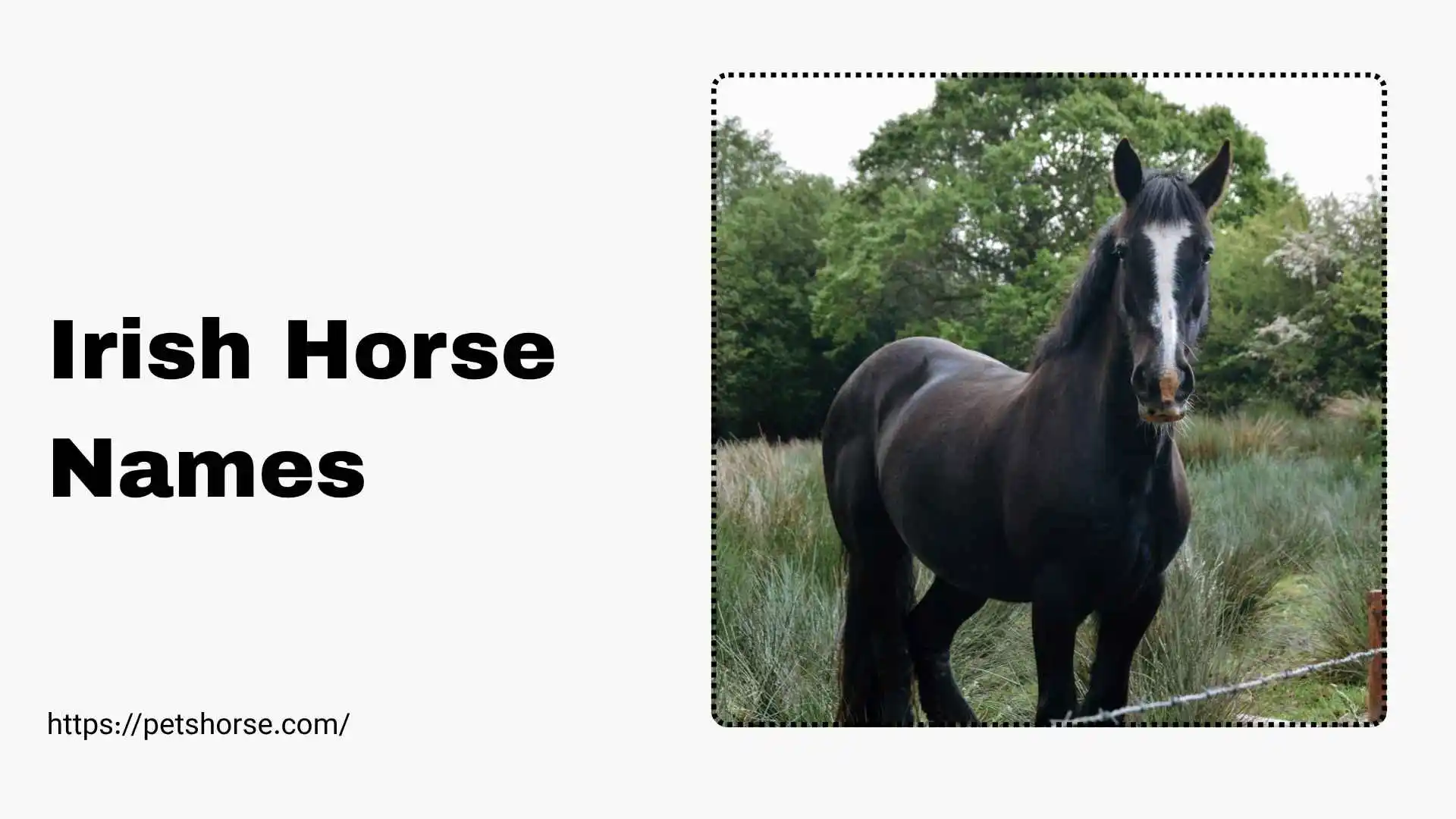
Choosing the perfect name for your horse is a profound responsibility. A name is more than a simple label called across a paddock; it is an energetic identity, a nod to heritage, and an enduring reflection of your horse’s unique spirit, conformation, and presence. Throughout history, few cultures have held the horse in such high spiritual, military, and agricultural esteem as the Irish.
From the legendary warhorses of Celtic myth to the rugged Connemara ponies and elite Irish Sport Horses dominating today’s international showjumping arenas, Ireland’s equestrian lineage is deeply woven into its landscape, language, and lore.
Whether you are looking to honor an Irish Draught’s sturdy heritage, find a spirited Gaelic title for a fiery Thoroughbred, or find a poetic name for a gentle piebald cob, looking to the Irish language (Gaeilge) and Celtic history provides an incredibly rich well of inspiration.
In this comprehensive, expert-vetted guide, we bypass the superficial lists to explore over 450 deeply researched Irish horse names.
Every single name featured below includes its literal translation, linguistic origin, cultural symbolism, and explicit guidance on what kind of horse it perfectly suits.
Featured Snippet Section
What Are the Best Irish Horse Names?
The best Irish horse names balance phonetic beauty with rich historical meaning. Top choices include Púca (mystical shapeshifter) for spirited horses, Breandan (prince) for majestic geldings or stallions, Sionainn (wise river) for calm mares, and Cúchulainn (legendary Celtic hero) for exceptionally strong, brave horses.
How Do You Choose the Perfect Irish Horse Name?
- Assess Personality: Match fiery temperaments to spirited Gaelic words like Tine (fire) or gentle souls to Caomh (gentle).
- Honor Heritage: Choose traditional Celtic mythological figures for historic Irish breeds like Connemaras or Irish Draughts.
- Test Articulation: Ensure the Gaelic pronunciation rolls easily off the tongue during daily stable calls.
- Verify Regulations: Check Horse Sport Ireland or relevant breed registry guidelines for official registered names.
The Master Horse Naming Guide: Stable Names vs. Registered Names
When navigating the world of equine nomenclature, it is vital to understand the structural duality of horse naming: the Stable Name (or “barn name”) and the Registered Name.
[ Equine Identity ]
│
├───► Stable Name (Daily use, short, rhythmic, phonetic safety)
│
└───► Registered Name (Official, lineage-focused, prefix/suffix rules)
Stable Names
The stable name is the moniker used for daily communication, feeding, and training. It should ideally consist of one or two syllables, ending in a vowel sound or soft consonant that carries clearly across a windy pasture. When selecting an Irish stable name, phonetics are key. For example, while the Irish name Caoilfhionn is visually beautiful, its phonetic pronunciation (Keelin) makes for a much safer and more practical stable name for daily use.
Registered Names
Registered names are the formal titles recorded with breed societies such as Horse Sport Ireland, the Connemara Pony Breeders’ Society, or The Weatherbys Thoroughbred Registry. These names face strict regulatory frameworks:
- They are typically restricted to a maximum of 18 or 27 characters (including spaces), depending on the registry.
- They often incorporate a distinct studbook prefix or suffix identifying the breeder (e.g., “Cruising,” “Clover Hill,” or regional townlands like “Bally”).
- They cannot be vulgar, overly commercial, or identical to iconic, historically protected horses (such as Arkle or Dawn Run).
An exceptional semantic strategy when choosing a registered name is to blend maternal and paternal lineage markers using historic Irish triad phrases or geography. If a filly is sired by an elite jumping stallion out of a mare descended from old Irish Draught lines, a registered name like Bánríon na Sionainne (Queen of the Shannon) honors her regional roots while remaining profoundly elegant.
Male Irish Horse Names (Geldings & Stallions)
These names carry masculine resonance, rooted in ancient chieftain titles, architectural landmarks, and classic Gaelic vocabulary perfectly suited for geldings and stallions.
- Ardál: Meaning “high valor.” Derived from ancient Irish roots, it suits an imposing, courageous stallion that leads his herd with an innate sense of authority.
- Barra: Meaning “fair-headed.” A classic Irish name representing clarity and light, perfectly suited for a palomino, light grey, or flaxen-maned gelding.
- Breandan: Meaning “prince” or “king.” Derived from the Old Irish word bréanainn, this name carries an air of natural nobility and aristocratic carriage.
- Cathal: Meaning “battle ruler.” Pronounced Ka-hal, this powerful name has historic ties to medieval warriors, making it perfect for a fierce, competitive performance horse.
- Colm: Meaning “dove.” Pronounced Koll-um, this gentle name stems from Latin origins naturalized into Irish lore, suited for a calm, dependable schoolmaster gelding.
- Conall: Meaning “strong wolf.” A legendary name found throughout early Ulster cycles, symbolizing fierce loyalty, sharp intelligence, and physical stamina.
- Cormac: Meaning “son of defilement” or historically “charioteer.” A name deeply tied to High King Cormac mac Airt, ideal for a driven, powerful driving or harness horse.
- Daire: Meaning “oak tree” or “fruitful.” Pronounced Dar-ah, it represents deep, immovable strength, resilience, and an unwavering, calm disposition.
- Donnacha: Meaning “brown warrior.” Derived from the elements donn (brown) and cath (battle), this is the quintessential choice for a brave bay or chestnut gelding.
- Eoghan: Meaning “born of the yew tree” or “youthful warrior.” Pronounced Owen, it carries deep associations with ancient northern dynasties and suits an elegant, athletic young horse.
- Fionn: Meaning “fair,” “white,” or “bright.” Tied to the legendary hero Fionn mac Cumhaill, this name embodies ultimate justice, wisdom, and brilliance, perfect for a spectacular grey.
- Gavan: Meaning “white hawk.” Representing sharp vision, swift speed, and focused accuracy, it suits an agile showjumper or cross-country star.
- Lorcan: Meaning “little fierce one.” Don’t let the “little” fool you; this name is packed with spirited energy, ideal for a fiery pony stallion or a compact, explosive jumper.
- Malachi: Meaning “messenger” or “second.” Though Hebrew in remote origin, it was famously borne by High King Máel Sechnaill II, evoking historic majesty and quiet strength.
- Oisín: Meaning “little deer.” Pronounced Uh-sheen, this poetic name belonged to the legendary warrior-poet son of Fionn. It fits an exceptionally graceful, light-footed horse with expressive eyes.
- Padraig: Meaning “noble patrician.” Pronounced Paw-drig, this deeply traditional name brings an aura of steady, time-tested reliability and stately, calm dignity.
- Ronan: Meaning “little seal.” A sweet, ancient name inspired by coastal folklore, perfect for a horse that absolutely loves splashing through water obstacles.
- Seamus: Meaning “supplanter.” Pronounced Shay-mus, this beloved, classic Irish name carries a friendly, hardworking, and endlessly charming personality.
- Tadhg: Meaning “poet” or “philosopher.” Pronounced Teige, it suits a highly intelligent, inquisitive horse that seems to thoughtfully contemplate his surroundings.
- Tiernan: Meaning “little lord.” An aristocratic title for a compact gelding who carries himself with immense pride, precision, and commanding presence.
Female Irish Horse Names (Mares & Fillies)
These names celebrate the rich feminine landscape of Ireland, channeling old queens, elemental forces, and the lyrical beauty of Gaelic linguistics.
- Aoife: Meaning “beautiful,” “radiant,” or “joyful.” Pronounced Ee-fa, this name belonged to one of the greatest warrior women in Celtic myth, ideal for a stunning, fiercely competitive mare.
- Bláthnaid: Meaning “flower bud.” Pronounced Blaw-nid, this delicate, historic name represents new beginnings, youthful grace, and blooming potential in a young filly.
- Caoimhe: Meaning “gentle,” “beautiful,” or “precious.” Pronounced Kee-va, it perfectly encapsulates a sweet-natured, affectionate mare who forms a profound bond with her handler.
- Clodagh: Named after the flowing River Clodagh in County Tipperary. Pronounced Clo-dah, it evokes rhythmic grace, consistency, and a smooth, fluid way of going.
- Deirdre: Meaning “sorrowful” or “raging” in ancient text, but modernly symbolizing tragic, mesmerizing beauty. A classic mythological name for a mare of unparalleled elegance.
- Eimear: Meaning “swift” or “ready.” Pronounced Ee-mer, she was legendary for possessing the six gifts of womanhood: beauty, voice, sweet speech, needlework, wisdom, and chastity. Excellent for an elite, multi-talented mare.
- Fíona: Meaning “vine” or “pure wine.” Representing intoxicating beauty, steady growth, and classic refinement, it fits an elegant dressage or show mare beautifully.
- Gráinne: Meaning “grain” or “solar goddess.” Pronounced Grawn-ya, this legendary name belongs to a famous, spirited heroine of Irish lore, well-suited for a bold, independent chestnut mare.
- Isolde: Meaning “ice ruler” or “fair lady.” Tied irrevocably to Anglo-Norman-Irish romance, this dramatic name suits a striking, regal mare with a commanding ring presence.
- Maeve: Meaning “the intoxicating one” or “she who rules.” Inspired by the legendary warrior Queen of Connacht, this is the ultimate name for a dominant, powerful alpha mare.
- Niamh: Meaning “bright” or “radiant.” Pronounced Nee-ve, she was the golden-haired goddess from Tír na nÓg (the Land of Youth) who rode a magical white horse across the sea.
- Orla: Meaning “golden princess.” Derived from Ór (gold) and Flaith (princess), this is a highly auspicious and beautiful choice for a palomino, dun, or bright chestnut filly.
- Róisín: Meaning “little rose.” Pronounced Ro-sheen, this deeply poetic name has long served as a lyrical allegory for Ireland itself, perfect for a sweet, highly prized mare.
- Sadhbh: Meaning “goodness,” “sweetness,” or “wise.” Pronounced Sive (rhymes with five), this ancient name suits a deeply sensible, calm, and intrinsically wise mare.
- Saoirse: Meaning “freedom” or “liberty.” Pronounced Seer-sha, it represents an unyielding, untamed spirit, ideal for an athletic horse that loves to gallop open trails.
- Sionainn: Meaning “wise river” (the River Shannon). Pronounced Shan-non, it honors Ireland’s longest river, representing depth, immense power, and a calm, unstoppable forward momentum.
- Siobhán: Meaning “God is gracious.” Pronounced Shiv-awn, this classic, melodic name brings an aura of serene composure, reliability, and old-world elegance.
- Sorcha: Meaning “bright,” “clear,” or “luminous.” Pronounced Sor-ka, it is the antithesis of darkness, perfect for a horse with a striking white blaze or an luminous coat.
- Una: Meaning “lamb” or “unity.” A gentle, peaceful name rooted in old Irish folklore, ideal for a kind, patient mare who excels in therapeutic riding or children’s disciplines.
- Zaira: Meaning “princess” or “blossoming flower.” While rarer in early texts, its lyrical quality offers a modern, sophisticated edge for a high-end sport filly.
Unique & Rare Irish Horse Names
If you want your horse to stand out entirely in the show ring or the stable registry, these rare Gaelic words and obscure historical references offer unparalleled distinction.
- Aisling: Meaning “dream” or “vision.” Pronounced Ash-ling, this refers to a specific 17th-century genre of Irish poetry where Ireland appears as a beautiful woman, ideal for a breathtakingly beautiful horse.
- Banshee: Derived from Bean Sídhe, meaning “woman of the fairy mound.” Perfect for a mare with an incredibly vocal personality or a thrilling, effortless stride.
- Cairbre: Meaning “charioteer.” An archaic name from the High Kings of Ireland, holding strong semantic links to old harness racing and deep equine heritage.
- Dagda: Named after the supreme god of Celtic mythology, known for his vast power, immense wisdom, and magical staff. An imposing name for a heavy draft stallion.
- Eriu: The ancient goddess of the land from whom the word “Ireland” (Éire) is directly derived. A profoundly historic choice for a foundation mare.
- Fearghal: Meaning “man of valor.” Pronounced Fer-gal, this rare old title honors unwavering bravery, making it an excellent choice for an field hunter or eventer.
- Glendalough: Meaning “valley of two lakes.” A historic monastic settlement in Wicklow, capturing a serene, spiritual, and ancient natural energy.
- Hallow: Inspired by the sacred, mystical festival of Samhain (the ancient Irish origin of Halloween). Suits a dark, mysterious horse born in late autumn.
- Iollan: Meaning “one who worships a different god” or “vibrant.” A rare, striking masculine name that implies a fiercely independent, eccentric personality.
- Kells: Named after the historic Book of Kells, representing intricate beauty, meticulous artistry, deep history, and priceless cultural value.
- Lughnasa: Meaning “the harvest festival of the god Lugh.” Pronounced Loo-na-sa, this rich, rhythmic name is perfect for a horse born in golden August.
- Midir: A mythological prince of the Tuatha Dé Danann associated with love, beauty, and high-stakes games of chess, ideal for a clever, strategic horse.
- Neit: The ancient Celtic god of war. A short, sharp, and highly uncommon name that packs immense acoustic and historical punch for a competitive horse.
- Ogham: Named after the ancient, linear Celtic alphabet carved into monumental standing stones. Suits a tall, muscular horse with distinct, striking markings.
- Púca: A legendary, mischievous Celtic shapeshifter that could take the form of a sleek black horse. Ideal for a highly intelligent, clever horse with a playful streak.
- Quigley: Meaning “maternal side” or “from the mother’s distaff.” A rare surname choice that works wonderfully for a homebred horse with an exceptional dam line.
- Rua: Meaning “red” or “russet.” While simple, it is rarely used raw in international stables, making it a punchy, authentic choice for a rich chestnut.
- Sheelah: An old Irish name meaning “heavenly” or “blind.” Historically celebrated on the day after St. Patrick’s Day, it carries a joyous, celebratory folk history.
- Tír na nÓg: Meaning “Land of the Youth.” The mythical Celtic paradise of eternal youth and beauty. An extraordinary registered name for a horse that stays forever young at heart.
- Uisneach: The sacred hill at the exact geographical and spiritual center of Ireland. It represents perfect balance, grounding, and ancient ceremonial power.
Strong & Powerful Irish Horse Names
These names evoke raw physical strength, military dominance, and the unyielding geological features of Ireland’s Atlantic coastline.
| Name | Meaning | Perfect For |
| Arkle | Named after the legendary Irish racehorse. | An unstoppable gelding with a relentless work ethic. |
| Borubh | Meaning “of the tributes” (Brian Boru). | A dominant, massive stallion who demands absolute respect. |
| Brian | Meaning “high,” “noble,” or “strong.” | A dependable, muscular Irish Draught with a heart of gold. |
| Cashel | Meaning “stone fort” or “castle.” | A stocky, unshakeable horse with rock-solid bone structure. |
| Clonmacnoise | A historic, enduring stone monastic site. | A powerful horse possessing immense stamina and presence. |
| Conan | Meaning “little wolf” or “hound.” | A compact, muscular powerhouse with explosive athletic ability. |
| Cúchulainn | The ultimate hero of Celtic myth. | An exceptionally brave horse that never backs down from a jump. |
| Donn | Meaning “dark” or “lord of the underworld.” | A massive, imposing black or dark bay stallion. |
| Eamon | Meaning “guardian of riches.” | A protective, loyal gelding who takes care of his rider. |
| Finian | Meaning “fair warrior.” | A striking grey or white gelding with high athletic drive. |
| Galloglass | Elite elite Norse-Gaelic mercenary warriors. | A brave, heavy-set field hunter built for tough terrain. |
| Goliath | Though biblical, used in historic Irish draft pull competitions. | A heavy-set Irish Draught or Clydesdale cross. |
| Hogan | Meaning “youthful” or “small warrior.” | A smaller, muscular cob with an aggressive, winning mindset. |
| Kian | Meaning “ancient” or “enduring.” | A rock-solid, long-lived horse with great physical constitution. |
| Liam | Meaning “resolute protector” or “helmet of will.” | A trustworthy gelding who builds immense confidence in his rider. |
| Mahon | Meaning “bear.” | A deep-chested, heavily muscled horse with raw pulling power. |
| Oscar | Meaning “deer-lover” or “spear of god.” | A fierce competitor with sharp, focused precision over fences. |
| Sarsfield | Named after the legendary Jacobite military commander. | A bold, dashing stallion that loves to gallop out front. |
| Tor | Meaning “rocky peak” or “crag.” | A tall, angular horse with immense physical stature. |
| Valiant | Celebrating the indomitable spirit of Irish cavalry mounts. | A brave eventer that handles technical cross-country tracks. |
Elegant & Royal Irish Horse Names
For horses with aristocratic carriage, refined headpieces, and fluid, floating movement, these names draw from Ireland’s high kings, queens, and elegant terms of endearment.
- Alannah: Meaning “dear child” or “beautiful.” A tender, melodic name that suits an elegant, highly affectionate mare with a soft eye.
- Bánríon: Meaning “queen.” Pronounced Bawn-ree-un, this commanding yet graceful title is reserved for a truly majestic mare who rules the arena.
- Caitlín: Meaning “pure.” Pronounced Kait-leen, this classic name brings an aura of timeless symmetry, immaculate coat, and refined movement.
- Dara: Meaning “oak” or “wise.” It carries a dual sense of elegant, clean structure combined with deep, old-world intelligence and composure.
- Emer: Named after the wife of Cúchulainn, legendary for her matchless grace, clever wit, and aristocratic poise.
- Fidelma: Meaning “beauty” or “constant.” A historic name borne by ancient saints and princesses, perfect for an exceptionally consistent dressage mare.
- Finola: Meaning “fair shoulders.” Pronounced Fi-noola, this name structurally points to beautiful equine conformation, ideal for a horse with a perfectly sloped shoulder.
- Gemma: Meaning “precious stone.” Though European in origin, it is highly favored in Ireland, capturing a dazzling, sparkling performance presence.
- Grá: Meaning “love.” A short, profoundly sweet name for a horse that is the absolute centerpiece of your stable and heart.
- Keeva: A simplified phonetic spelling of Caoimhe, emphasizing unparalleled aesthetic beauty, gentleness, and artistic fluidity.
- Malvina: Meaning “smooth brow” or “fair lady.” A poetic literary name that suits a horse with an exceptionally fine, chiseled headpiece.
- Mavourneen: Derived from Mo Mhuirnín, meaning “my beloved.” A classic, romantic terms of endearment for that once-in-a-lifetime horse.
- Miréin: Meaning “a person of exceptional merit” or “a jewel.” A rare, high-status name for a top-tier premium performance horse.
- Oonagh: Meaning “lamb” or “queen of the fairies.” Pronounced Oo-na, this name carries an ethereal, floating quality, perfect for a light, elegant mover.
- Regan: Meaning “the king’s child” or “royal.” A noble, gender-neutral name that suits a horse with natural presence and clean, aristocratic lines.
- Ríoghnach: Meaning “queenly.” Pronounced Ree-nock, this old Gaelic name is perfect for a proud, high-stepping mare who carries herself with elite dignity.
- Ríor: Meaning “royal prince.” A rare, archaic root that provides a sharp, distinctive name for a striking, aristocratic gelding.
- Shannon: Named after Ireland’s grandest river, evoking a sense of deep, flowing majesty, classic style, and timeless grace.
- Sovereign: Honoring the historic minting and royal equine connections of old Dublin, ideal for a grand, imposing stallion.
- Tara: Named after the Hill of Tara, the ancient, sacred inaugural seat of the High Kings of Ireland, symbolizing ultimate history and royal status.
Funny & Clever Irish Horse Names
Equestrian life shouldn’t always be intensely serious. These punny, lighthearted, and culturally cheeky names are perfect for horses with quirky personalities.
- Banshee Wail: Perfect for a horse that begins whinnying loudly the absolute second they hear a feed bucket moving in the barn.
- Blarney Stone: For a highly charismatic, clever horse who can sweet-talk or nudge their way out of any halter or stall latch.
- Boxty: Named after the traditional Irish potato pancake. Ideal for a round, chunky, endlessly lovable cob or pony.
- Coddle: Named after the famous Dublin comfort food stew. A funny, cozy name for a warm-natured horse that loves long grooming sessions.
- Craic: Meaning “fun,” “gossip,” or “good times.” Pronounced Crack, this is perfect for a playful horse that keeps the entire barn entertained with their antics.
- Dublin Bay: A clever choice for an eventer or jumper that regularly “banks” or lands with massive clearance over water jumps.
- Gallowglass Lass: A tongue-twister name for a strong-willed, athletic mare who loves to playfully boss around her herd mates.
- Leprechaun: Ideal for a compact pony with a massive, bold personality who loves hiding in the blind spot of the pasture.
- Limu: Short for Limerick, perfect for a clever horse whose eccentric behavior always seems to tell an amusing story.
- Muck: An affectionate, straightforward name for that specific grey horse who cannot resist rolling in the deep mud immediately after a bath.
- Paddy Wagon: A hilarious, robust name for a large, heavy draft horse or cross that safely hauls everyone around the trails.
- Pint of Plain: Inspired by Flann O’Brien’s famous poetry, this is a brilliant name for a solid, honest, rich black or dark bay horse.
- Poteen: Named after traditional Irish moonshine. An ironic name for an incredibly spirited, fast, and intoxicatingly energetic horse.
- Shamrock Shake: A fun, rhythmic name for a flashy, high-stepping horse or an energetic pony with a quick, shuffling trot.
- Spud: The ultimate, universal nickname for a dependable, round, short-backed horse with a heart of gold and an obsession with treats.
- Stout: A fantastic name for a thick-set, dark-coated Irish Draught who is built like a brick wall and has an unshakeable disposition.
- Tayto: Named after Ireland’s iconic, beloved potato chip brand. A crisp, happy name for a energetic, golden-colored horse or pony.
- Top o’ the Morning: A joyous, classic registered name for an early-rising horse who is always waiting eagerly at the gate at sunrise.
- Whiskey Sour: For a horse with a generally sweet disposition but a notably sharp, sassy attitude when asked to work hard.
- Wicklow Way: A clever name for a horse that prefers making their own path through the brush rather than following the arena rail.
Breed-Specific Names
Different Irish horse breeds have distinct physical structures, historical roles, and cultural identities. Matching the linguistic roots to the specific breed adds immense depth.
Connemara Pony Names
Hailing from the wild, rocky terrain of County Galway, Connemara ponies are renowned for their hardiness, intelligence, and exceptional jumping talent.
- Altan: Meaning “wild brook.” Reflects the natural, rugged landscape of Connemara and a pony’s quick, agile movement over rough terrain.
- Ballynahinch: Named after the iconic castle lake in the heart of Connemara, representing deep regional roots and natural elegance.
- Clifden: Named after the historic coastal capital of Connemara, home to the world-famous annual Connemara Pony Show.
- Galway Boy: A classic folk name celebrating a sturdy, courageous pony gelding built to handle the wild Atlantic elements.
- Kylemore: Inspired by Kylemore Abbey in Galway, a stunning lakeside sanctuary that perfectly matches a beautiful, serene pony.
- Marla: Meaning “shining sea.” Connemaras evolved along the Atlantic coast, making this a beautiful nod to their maritime heritage.
- Twelve Bens: Named after the sharp mountain range dominating the Connemara landscape, ideal for a pony with incredible climbing and jumping ability.
Irish Draught & Sport Horse Names
Known for clean bone, powerful shoulders, deep hearts, and world-class athletic scope, these names carry immense strength and operational pride.
- Clover Hill: A historical tribute to one of the most foundational, legendary sires in the history of the Irish Draught studbook.
- Cruising: Honoring the world-famous grey Irish Sport Horse stallion who came to define international showjumping excellence.
- Custom Made: Named after the famous Irish-bred eventer who won individual Olympic gold, representing ultimate athletic precision.
- Kilkenny: Named after the historic marble county, famous for breeding deep-boned, powerful Irish Draught horses with massive jumping scope.
- Leinster: Representing the eastern province of Ireland, a powerhouse region for top-tier equestrian breeding, training, and competition.
- Munster: Honoring the rugged southern province, evoking images of deep limestone pastures that build dense, high-quality bone in growing horses.
- Roscommon: A historic breeding hub for traditional Irish Draughts, capturing an authentic sense of old-world farm heritage and power.
Color-Based Irish Horse Names
In traditional Gaelic culture, a horse’s color was often seen as an external manifestation of its inner elemental alignment.
Black Horse Names
- Chiarán: Meaning “little dark one.” Pronounced Keer-awn, this ancient name is perfect for a deep black gelding or stallion with a mysterious presence.
- Dubh: The literal Irish word for “black.” Pronounced Duv, it offers a short, minimalist, and deeply authentic name for a pitch-black mount.
- Fiachra: Meaning “raven.” Pronounced Fee-ah-kra, this legendary name from the Children of Lir myth fits a sleek, shiny black horse perfectly.
- Guaire: Meaning “noble” but historically tied to dark, shadowed features. A rare, aristocratic name for an elite black sport horse.
- Oíche: The literal Irish word for “night.” Pronounced Ee-ha, this beautiful, soft name is an exquisite choice for a pitch-black mare.
White & Grey Horse Names
- Airgead: The literal Irish word for “silver.” Pronounced Ar-ig-id, it shines beautifully as a name for a dapple grey or metallic-coated horse.
- Bán: The literal Irish word for “white” or “fair.” Pronounced Bawn, it is a clean, classic, and powerful name for a pure white horse.
- Bile: Meaning “sacred tree” or “clear shining light.” An ancient mythological name that fits a majestic, wise old grey schoolmaster perfectly.
- Ceo: The Irish word for “fog” or “mist.” Pronounced Kyoh, it beautifully captures the soft, elusive beauty of a young, fading grey horse.
- Gealach: The Irish word for “moon.” Pronounced Gyuh-lok, it is a beautiful, deeply symbolic name for a glowing white or light grey mare.
Chestnut & Red Horse Names
- Corc: An archaic Irish word meaning “red” or “crimson.” A sharp, uncommon alternative for a copper-toned chestnut gelding.
- Flann: Meaning “ruddy” or “blood red.” An ancient masculine name that perfectly suits a fiery, deep-red chestnut stallion.
- Freach: Meaning “heather.” Represents the beautiful, rustic purple-red hillsides of Ireland, ideal for a rich, warm chestnut mare.
- Laochna: Meaning “red warrior.” A powerful, poetic compound name for a brave, bold chestnut performance horse.
- Rowan: Meaning “little red one” or the rowan tree, which produces vibrant red berries. A highly popular, beautiful name for chestnuts.
Brown & Bay Horse Names
- Ciar: Meaning “dark brown” or “dusky.” Pronounced Keer, it is a beautiful, understated name for a rich seal-brown horse.
- Donn: The core Irish word for “brown.” Simple, strong, and deeply authentic, it suits an honest, hardworking bay or brown horse.
- Grian: Meaning “sun.” It perfectly captures the golden-red highlights that ripple through a bay horse’s coat under open sunlight.
- Lachtna: An ancient Irish word specifically denoting a “dun” or “yellow-brown” color, ideal for a buckskin or dun horse.
- Macha: The ancient goddess of war and sovereignty associated with the land and earth, perfect for a powerful, deep-bay foundation mare.
Personality Based Irish Horse Names
Matching your horse’s innate behavioral traits to an authentic Gaelic descriptor creates a powerful energetic harmony between name and beast.
Fast & Spirited Horses
- Gaoith: Meaning “wind.” Pronounced Gwee, this short, explosive name fits a horse with blistering turf speed or an effortless gallop.
- Lua: Meaning “velocity” or “acceleration.” A modern, punchy name for a racehorse or a fast, agile eventing mount.
- Tine: Meaning “fire.” Pronounced Tin-eh, this short name perfectly encapsulates a fiery, highly sensitive, and passionate performance horse.
Gentle & Loyal Horses
- Alba: Meaning “peace” or “white dawn.” A serene, calming name for a gentle horse that acts as a soothing anchor for the entire stable.
- Cara: The literal Irish word for “friend.” A beautiful, universally recognized name for a loyal, affectionate equine companion.
- Dílse: Meaning “loyalty” or “faithfulness.” Pronounced Deel-sheh, this name represents an unshakeable, devoted bond between horse and rider.
Intelligent & Bold Horses
- Bricin: Meaning “speckled” or historically “clever one.” Pronounced Brik-in, it suits a smart horse that loves figuring out puzzle feeders.
- Conn: Meaning “wisdom” or “chief intellect.” A short, powerful name for a highly strategic, calculating horse over technical fences.
- Glic: The literal Irish word for “crafty” or “cunning.” Pronounced Glik, it is perfect for that clever horse who always finds a way out of their blanket.
Famous Horse Naming Inspiration from Irish History & Lore
- Enbarr of the Flowing Mane: In Celtic mythology, this was the magical horse belonging to Manannán mac Lir, the god of the sea. Enbarr could gallop across water and land without ever getting her hooves wet. A spectacular name for an elite water-crossing eventer.
- The Black Thief’s Steed: A legendary horse from Irish fairy tales capable of leaping over wide oceans and outrunning the wind itself. Perfect for a dark horse with immense scope.
- Arkle: Widely considered the greatest steeplechaser in history. This legendary Irish Thoroughbred won three consecutive Cheltenham Gold Cups in the 1960s, carrying massive weights to victory, symbolizing ultimate stamina and national pride.
- Dawn Run: The most successful mare in steeplechasing history, she remains the only horse to have ever won both the Champion Hurdle and the Cheltenham Gold Cup, representing unparalleled feminine grit.
- Cuchulainn’s Chariot Steeds: Named Liath Macha (the Grey of Macha) and Dub Sainglend (the Black of Sainglend). They were twin, semi-divine warhorses who possessed human intelligence and wept tears of blood when their master was facing battle.
5 Expert Tips for Choosing the Perfect Horse Name
- Prioritize Phonetic Simplicity for Barn Use: While a name like Flannery or Finnegan flows beautifully, ensure the short version can be barked out instantly in an emergency.
- Research Breed Registries Early: If you are naming an elite Irish Sport Horse or Connemara, check the studbook database to ensure your chosen Gaelic name variant isn’t already taken by a prominent stallion.
- Evaluate the “Groom Test”: Say the name ten times out loud while doing chores. If it feels awkward or causes you to stumble, refine the phonetic structure.
- Embrace Cultural Authenticity over Trends: Trendy names fade quickly, but a name rooted in 2,000 years of Celtic history carries a timeless, enduring dignity.
- Consider Future Sale and Show Appeal: A refined, poetic Irish name can actually add a subtle layer of premium prestige and marketability to a high-end sport horse.
Common Equine Naming Mistakes to Avoid
- Choosing Hard-to-Pronounce Gaelic Spellings: Avoid names with silent interior consonant blocks (like Bláthnaid) unless you are completely comfortable regularly explaining the phonetic pronunciation to stable hands, vets, and show announcers.
- Overusing Cliche Names: Moving past generic choices like “Lucky” or “Clover” opens up a world of sophisticated, highly specific historical titles.
- Ignoring Future Physical Growth: Naming a compact yearling “Lorcan” (little fierce one) can feel distinctly ironic if they unexpectedly sprout into a massive 17.2-hand giant.
- Selecting Offensive or Inappropriate Phrases: Ensure any casual slang or historical terms are researched thoroughly to avoid embarrassing cultural faux pas in the show ring.
The Final Equine Naming Checklist
Before painting your horse’s stall plate, ensure your top choice satisfies these core parameters:
- [ ] Phonetically safe and easy to call out across an open paddock.
- [ ] Accurately matches the horse’s true personality and temperament.
- [ ] Harmonizes with their physical color, coat, and conformation.
- [ ] Highly memorable to vets, farriers, and show judges.
- [ ] Holds a deeply meaningful literal translation or cultural origin.
- [ ] Fully compliant with official breed society registration rules.
- [ ] Family-approved and universally respected across the stable.
Frequently Asked Questions (FAQ)
What are the most popular traditional Irish horse names?
The most popular traditional names include Fionn (fair/bright) for grey horses, Cara (friend) for gentle companions, and Rua (red) for chestnuts. For performance horses, names honoring legends like Arkle or Cruising remain highly favored.
Can two horses share the exact same registered name?
In official registries like Horse Sport Ireland or the Weatherbys Thoroughbred studbook, no two horses can have the exact same registered name within active generations. Unique prefixes, numbers, or suffixes are typically added to distinguish them.
How do I properly pronounce complex Irish horse names?
Many Irish names look phonetically complex due to traditional Gaelic spelling rules. For example, Sadhbh is pronounced Sive, Niamh is pronounced Neeve, and Caoimhe is pronounced Kee-va. It is often helpful to write the phonetic spelling on your horse’s stall door.
What are some strong Irish names for a heavy draft horse?
Excellent strong options include Cashel (stone fort), Mahon (bear), and Borubh (after High King Brian Boru). These names evoke massive bone structure, steady power, and historic work ethics.
Are there specific naming rules for Connemara Ponies?
Yes. The Connemara Pony Breeders’ Society requires unique names and highly encourages or requires the inclusion of a registered kennel or studbook prefix indicating the breeder’s specific farm or location.
What is a good Irish name for a mischievous horse?
Púca is the ultimate choice, named after the mythical, playful Celtic shapeshifter that often took the form of a wild horse. Glic (crafty/cunning) is another fantastic option.
What are elegant Irish names for a dressage mare?
Bánríon (Queen), Fidelma (constant beauty), and Ríoghnach (queenly) offer sophisticated, lyrical cadences that match the precision and elegance required in the dressage arena.
Why do so many Irish horse names start with “Bally” or “Kil”?
These are traditional Irish landscape prefixes used in townland names. “Bally” comes from Baile (town or homestead), and “Kil” comes from Cill (church or ancient cell), indicating the specific historical region where the horse was bred.
Conclusion
Finding the perfect Irish name for your horse is a rewarding journey into language, landscape, and ancient history. By selecting a name rooted in authentic Gaelic culture, you honor the incredible heritage of the horse while gifting your companion an identity as noble, strong, and enduring as the hills of Ireland themselves. Take your time, test the phonetics in your daily barn routine, and choose a title that will ring out with pride across the fields for years to come.

I am Olivia Carter, a pet lover, animal naming researcher, and creative writer who loves helping people find the perfect names for their furry companions. I believe every pet has a unique personality, and the right name can reflect their character, appearance, and special bond with their family. Through my research and writing, I explore cute, unique, funny, and meaningful pet names inspired by nature, mythology, colors, personalities, and popular culture.
I have written several pet naming guides, including my books “The Ultimate Pet Names Guide: Finding the Perfect Name for Your Companion” and “Creative Cat & Dog Names: Thousands of Ideas for Every Personality.” My goal is to make choosing a pet name simple, enjoyable, and memorable for every pet owner.
 Ethan Williams